

What Does Immune Support Actually Mean? — A UK Guide to Reading Immune Health Labels
 By Team Care and Cure
You are standing in the supplement aisle in October. Half a dozen bottles in front of you all say much the same thing — “immune support”, “supports immunity”, “for everyday immune health”.
You wonder what any of it actually promises. And whether, given the cold doing the rounds at work, you should take any of it.
That moment of label-reading uncertainty is one of the most common in UK wellness — and the answer is genuinely useful once you know how to read what is written. This article explains what “immune support” really means in supplement language, the everyday habits that genuinely influence immune function, and how to make sensible choices without overreaching for what a tablet can do.
What does “immune support” actually mean on a supplement label?
“Immune support” is regulated language. It is narrower than most readers realise — and far narrower than the bold packaging suggests.
In the UK and across Europe, supplements can only carry an immune-related claim if that claim has been authorised by the European Food Safety Authority (EFSA) and adopted into UK law. The authorised wording is deliberately careful: nutrients are described as “contributing to the normal function of the immune system”, not as boosting, enhancing, or strengthening it. [1] The distinction matters. “Normal function” means helping the body do what it already does. It does not mean making the immune system more powerful, more aggressive, or more reactive — none of which is necessarily a good thing.
Several nutrients meet the bar for an authorised immune-function claim. Vitamin D, vitamin C, zinc, selenium, copper, folate, vitamin B6, vitamin B12, vitamin A, and iron all “contribute to the normal function of the immune system” under the EU and UK registers of authorised health claims. [1] Beyond that, the language opens up. “Wellness”, “immune wellness”, or “everyday defence” are marketing phrases — not regulated claims — and they carry no formal evidence requirement.
This is why “boosts your immune system” is a phrase you should treat with caution on any label. Under UK regulations it is not an authorised claim, and clinically it is not the goal anyway. An overactive immune system is the basis of allergy and autoimmune conditions, neither of which anyone is trying to encourage.
Summary: On a UK supplement label, “immune support” should mean a nutrient that contributes to the normal function of the immune system, under the EFSA-authorised wording. It does not mean the product strengthens, boosts, or supercharges immunity. “Normal function” is the regulated standard — and it is the right physiological goal.
How the immune system actually works — in plain English
The immune system is not a single thing you can dial up or down. It is a network.
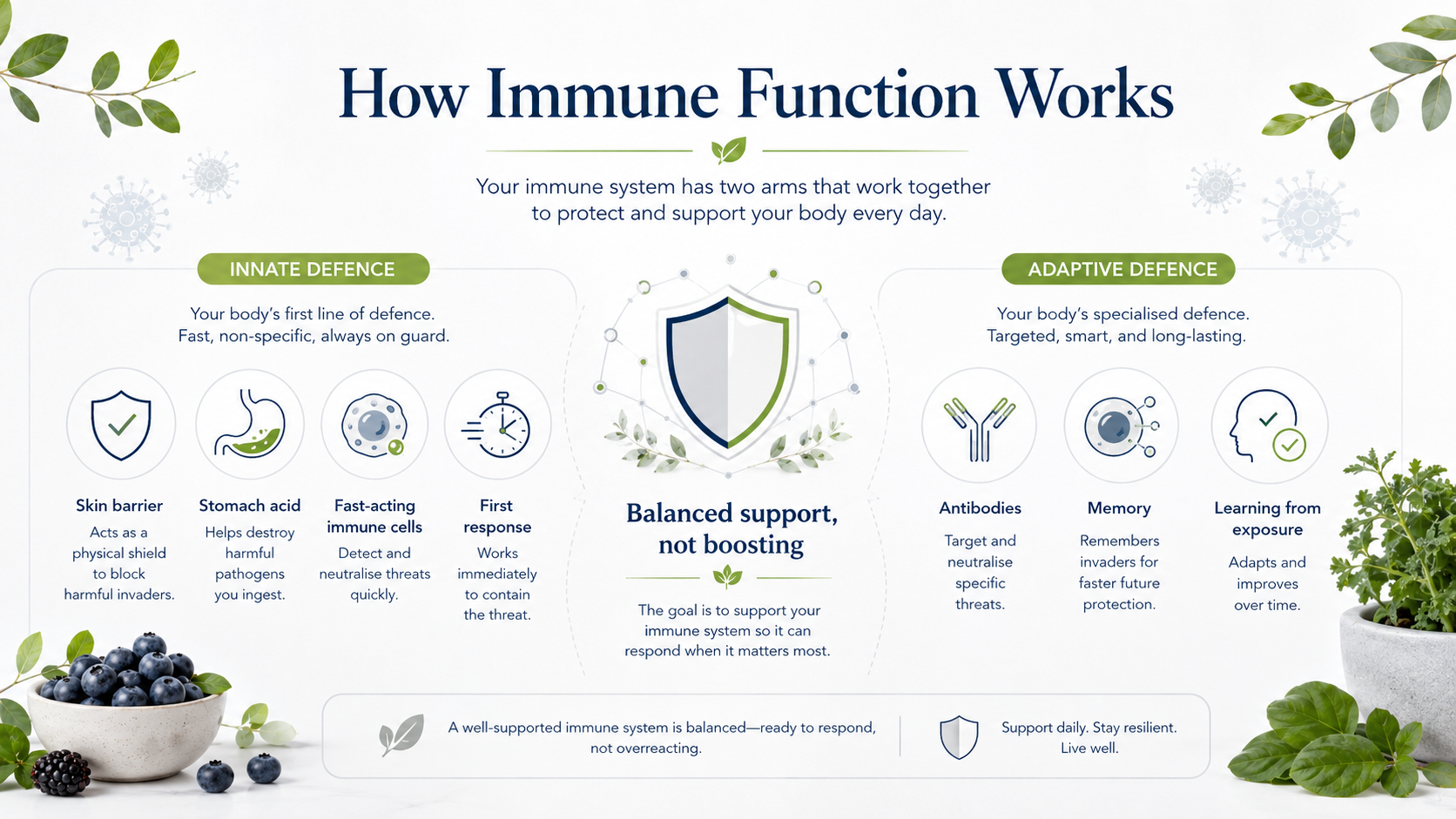
It has two arms. The innate immune system is the body’s first responder: skin and mucous membranes, stomach acid, the inflammatory response, and a population of fast-acting immune cells such as macrophages and natural killer cells. It does not need previous exposure to a threat to react. It simply detects danger and responds.
The adaptive immune system is slower but specific. It learns. It produces antibodies tailored to particular threats and remembers them for future encounters. This is how vaccines work — by training the adaptive immune system without the danger of the real disease.
Most of the time these two systems are quietly doing their jobs without you being aware of any of it. Cells are being made, tested, sent out, and cleared every minute. Threats are being detected and dealt with before they ever become symptoms. The immune system is not idle in good health — it is constantly, invisibly active.
This is also why the language of “boosting” misses the point. The system needs to be balanced, not amplified. Too little response leaves you vulnerable. Too much response causes inflammation, allergy, or autoimmune attack on the body’s own tissues. The realistic goal of nutrition and lifestyle is to give the immune system what it needs to function normally — not more, not less.
Summary: The immune system is a balanced network of innate (fast, general) and adaptive (slow, specific) defences. The goal is normal, balanced function — not amplification. This is why supplement labels can describe nutrients as contributing to normal immune function but cannot promise to “boost” immunity.
The factors that genuinely influence immune function
Most of the day-to-day variation in how your immune system performs comes from a small number of lifestyle factors. None of them is dramatic. All of them are well-evidenced.
Sleep. Sleep is when much of the immune system’s regulatory work happens. Short sleep, broken sleep, and shift work all influence immune signalling. A 2021 review in Communications Biology concluded that “sleep deprivation may result in deregulated immune responses with increased pro-inflammatory signaling, thus contributing to increase the risk for the onset and/or worsening of infection”. [2] If you are trying to support your immune system, sleep is the first place to look.
Nutrition. Several nutrients are required for the immune system to function normally — including vitamin D, vitamin C, zinc, selenium, vitamin A, folate, and iron. [1] A varied diet built around vegetables, fruit, wholegrains, oily fish, eggs, dairy or fortified alternatives, and adequate protein supplies most of these for most people most of the time. The exceptions in the UK are vitamin D in autumn and winter (see below) and, for some adults, iron.
Stress. Persistent psychological stress alters immune signalling and is associated with slower wound healing and increased susceptibility to minor infections. Brief acute stress is part of normal life. It is the long-running, unrelieved variety that matters most for immune function.
Movement. Moderate, regular physical activity supports normal immune function. Very prolonged, very intense training without sufficient recovery can do the opposite. As ever, the sensible middle ground is what counts.
Smoking and excessive alcohol. Both alter immune cell behaviour and inflammatory signalling, and both are associated with poorer infection outcomes. Reducing or removing them benefits the immune system more than any supplement.
Hydration and gut health. A large part of the immune system sits in or near the gut lining, where it interacts continuously with food, microbes, and the gut barrier. Adequate fluid intake and a varied, fibre-containing diet support that interface.
Summary: The factors that most strongly influence immune function are sleep, nutrition, stress, regular movement, not smoking, moderate alcohol, and a healthy gut. Supplements can fill specific gaps, but they sit on top of these foundations — they do not replace them.
When changes in immunity warrant seeing a GP
Most colds and minor infections in autumn and winter are entirely normal and resolve on their own. They do not mean your immune system is failing.
Speak to your GP if you notice any of the following:
- Infections that recur unusually often — for example, repeated chest infections, ear infections, sinus infections, or skin infections within a short period
- A wound, cut, or skin infection that is slow to heal or keeps coming back
- Persistent unexplained fevers, especially low-grade fevers lasting more than a couple of weeks
- Unexplained weight loss
- Severe ongoing fatigue that does not improve with rest
- Persistent swollen lymph nodes in the neck, armpits, or groin
- Frequent, severe, or unusually long-lasting episodes of cold, flu, or chest symptoms
- A new pattern of recurrent infections in someone who used to get them rarely
Seek urgent medical care for a high fever that does not come down, severe difficulty breathing, severe abdominal pain, a stiff neck with fever and a non-blanching rash, confusion, or any infection that is rapidly worsening.
For the NHS overview of when to get help with a possible infection, see the NHS guidance on common signs of infection and your GP surgery’s own advice for acute symptoms.
Summary: Occasional colds are normal. Recurrent, prolonged, or unusually severe infections — or unexplained weight loss, persistent fever, slow wound healing, or swollen lymph nodes — should always be reviewed by a qualified healthcare professional.
What can you do to support your immune system day to day?
The most useful interventions are the everyday ones — and they are almost all free.
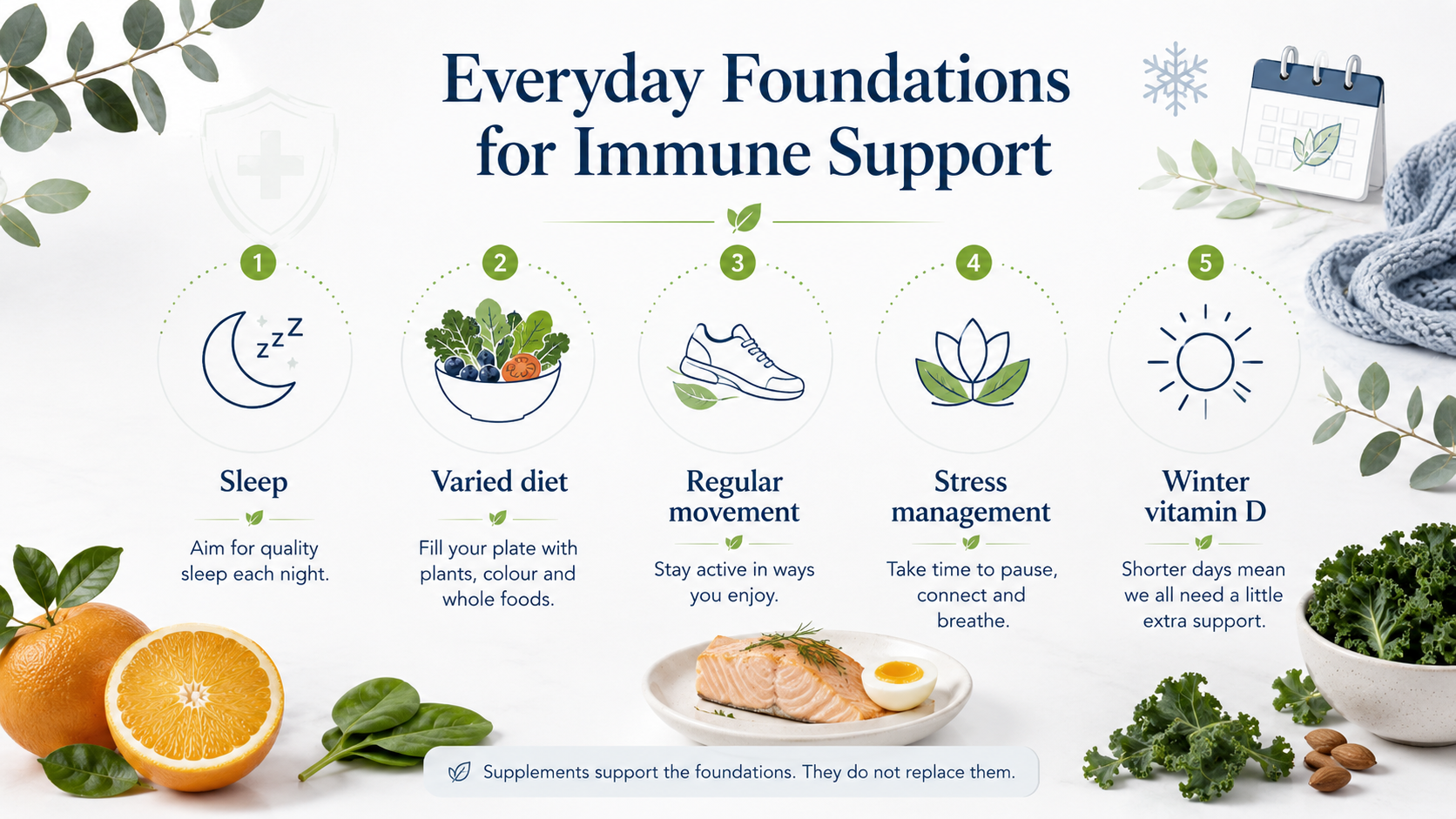
Protect your sleep. Aim for a regular bedtime and wake time, dim lights in the evening, and an unhurried wind-down. Even modest improvements in sleep consistency are worth more than any single supplement.
Eat for variety, not for restriction. A plate built around vegetables, fruit, wholegrains, oily fish, eggs, beans, and adequate lean protein supplies the nutrients the immune system needs to function normally. Variety across the week matters more than perfection on any one plate.
Move regularly, recover properly. A daily walk, three or four sessions of moderate exercise a week, and one or two genuine rest days does more for the immune system than any short, punishing programme.
Manage stress where you can. Time outdoors, social contact, and a few minutes of intentional calm at the start and end of the day all matter. None of this is dramatic — but the cumulative effect on immune signalling is real.
Wash your hands properly. A boring but consistently effective measure during cold and flu season.
Consider a daily vitamin D supplement through autumn and winter. This is direct NHS guidance for adults across the UK: from October to early March, sunlight on UK skin is too weak to produce meaningful vitamin D, so “everyone (including pregnant and breastfeeding women) should consider taking a daily supplement containing 10 micrograms of vitamin D during the autumn and winter”. [3] For people with limited sun exposure, darker skin, or who are housebound, the recommendation extends across the whole year. [3]
Vitamin D is one of the nutrients with an EFSA-authorised claim that it contributes to the normal function of the immune system. [1] It is also the nutrient with the largest deficiency gap in the UK adult population — which is why a winter vitamin D habit is the single most evidence-led supplement choice for most UK adults.
D Plus from Care & Cure Nutraceuticals provides vitamin D3 (cholecalciferol) — the form the skin itself produces from sunlight — alongside vitamin K2 (MK-4), included as the co-factor that directs absorbed calcium into bone tissue rather than soft tissue. Vitamin D3 contributes to the normal function of the immune system under the authorised UK and EU wording, which is why D Plus sits in the immune-support category rather than being framed around any single condition. If you are interested in a different nutrient profile, the Vitamin C Powder and Immune Plus are also part of the immune-support range. D Plus at 5,000 IU is a high-strength serving — substantially above the standard NHS daily recommendation of 400 IU — and is best used under healthcare professional guidance, particularly where vitamin D status has been confirmed through a blood test. If you take anticoagulant (blood-thinning) medication, speak to your doctor before starting any supplement containing vitamin K.
Summary: Sleep, varied diet, regular movement, stress management, and basic hygiene are the most evidence-led ways to support normal immune function. A daily vitamin D supplement through UK autumn and winter is the single supplement choice with the strongest official guidance behind it, in line with NHS recommendations.
Why immune function changes as we get older
It is worth understanding that the immune system, like every other body system, changes with age.
This gradual change is known as immunosenescence. It is not a disease. It is a normal physiological shift, in which the body produces fewer new naïve immune cells, antibody responses become a little less brisk, and the balance between different arms of the immune system gradually moves with the years. Most adults will not notice anything specific. It explains, though, why infections that would have been shrugged off at 25 can feel more disruptive in the mid-40s and beyond, and why the same cold can take longer to clear.
Two practical points follow from this. The first is that the lifestyle foundations — sleep, varied diet, movement, stress — matter more with age, not less. They are doing useful work even when nothing feels obviously wrong. The second is that vitamin D status becomes more important. The skin’s ability to produce vitamin D from sunlight declines with age, and the kidneys’ role in activating it also becomes less efficient. The case for taking a vitamin D supplement through UK winters becomes stronger after 40, and stronger again after 65.
None of this changes the basic rule. The goal is normal immune function, not maximum immune function. Support the foundations consistently, fill any genuine nutrient gaps, and the rest of the system is usually quietly competent.
Summary: Immune function changes gradually with age — a normal physiological shift, not a disease. The lifestyle foundations matter more with age, and the case for a daily vitamin D supplement through UK autumn and winter becomes stronger.
The bottom line
“Immune support” is a more modest promise than the packaging makes it look — and that is a good thing.
On a UK supplement label, it means a nutrient that contributes to the normal function of the immune system: helping the body do what it already does, not turning the system up to maximum. The biggest day-to-day drivers of immune function are sleep, nutrition, stress, movement, and not smoking. Supplements sit on top of these foundations rather than replacing them, and vitamin D through UK autumn and winter is the choice with the strongest official guidance behind it.
Most colds and seasonal bugs are not a sign that anything is wrong with your immune system. Persistent, recurrent, or unusually severe infections always are — and those are conversations to have with your GP, not your supplement shelf.
Frequently asked questions
What does “immune support” mean on a supplement? It means a nutrient that “contributes to the normal function of the immune system” under UK and EU authorised wording. It does not mean the product boosts, strengthens, or amplifies your immune system — those phrases are not authorised health claims.
Can supplements boost your immune system? “Boosting” is not a meaningful goal — a balanced immune system is. Supplements can help the immune system function normally by supplying nutrients it needs, but they cannot make a healthy immune system stronger than it already is.
What is the best vitamin for immune support in the UK? Vitamin D has both an authorised immune-function claim and direct NHS guidance to consider a daily supplement during UK autumn and winter, which makes it the most evidence-led single choice for most UK adults. Vitamin C, zinc, and selenium also contribute to normal immune function.
Do I really need a vitamin D supplement in winter? NHS guidance is that everyone in the UK should consider taking a daily supplement containing 10 micrograms (400 IU) of vitamin D from October through to early March, because sunlight is too weak in those months for the skin to produce enough. People with limited sun exposure or darker skin tones may benefit year-round.
When should I see a doctor about a weakened immune system? See your GP if you notice unusually frequent infections, wounds that are slow to heal, persistent low-grade fever, unexplained weight loss, severe ongoing fatigue, or persistently swollen lymph nodes. These can have many causes and should always be assessed properly rather than addressed with supplements.
This article is for informational purposes only and does not constitute medical advice. Always consult a qualified healthcare professional before starting any new supplement, particularly if you are pregnant, breastfeeding, taking medication, or have a diagnosed medical condition. Food supplements are not intended to diagnose, treat, cure, or prevent any disease.
References
1. EFSA Panel on Dietetic Products, Nutrition and Allergies (NDA) (2010). Scientific Opinion on the substantiation of health claims related to vitamin D and normal function of the immune system and inflammatory response (ID 154, 159), maintenance of normal muscle function (ID 155) and maintenance of normal cardiovascular function (ID 159) pursuant to Article 13(1) of Regulation (EC) No 1924/2006. EFSA Journal. 8(2):1468. doi:10.2903/j.efsa.2010.1468
2. Garbarino S, Lanteri P, Bragazzi NL, Magnavita N, Scoditti E (2021). Role of sleep deprivation in immune-related disease risk and outcomes. Communications Biology. 4(1):1304. PMC8602722
3. National Health Service (UK). Vitamin D. NHS. nhs.uk/conditions/vitamins-and-minerals/vitamin-d
