
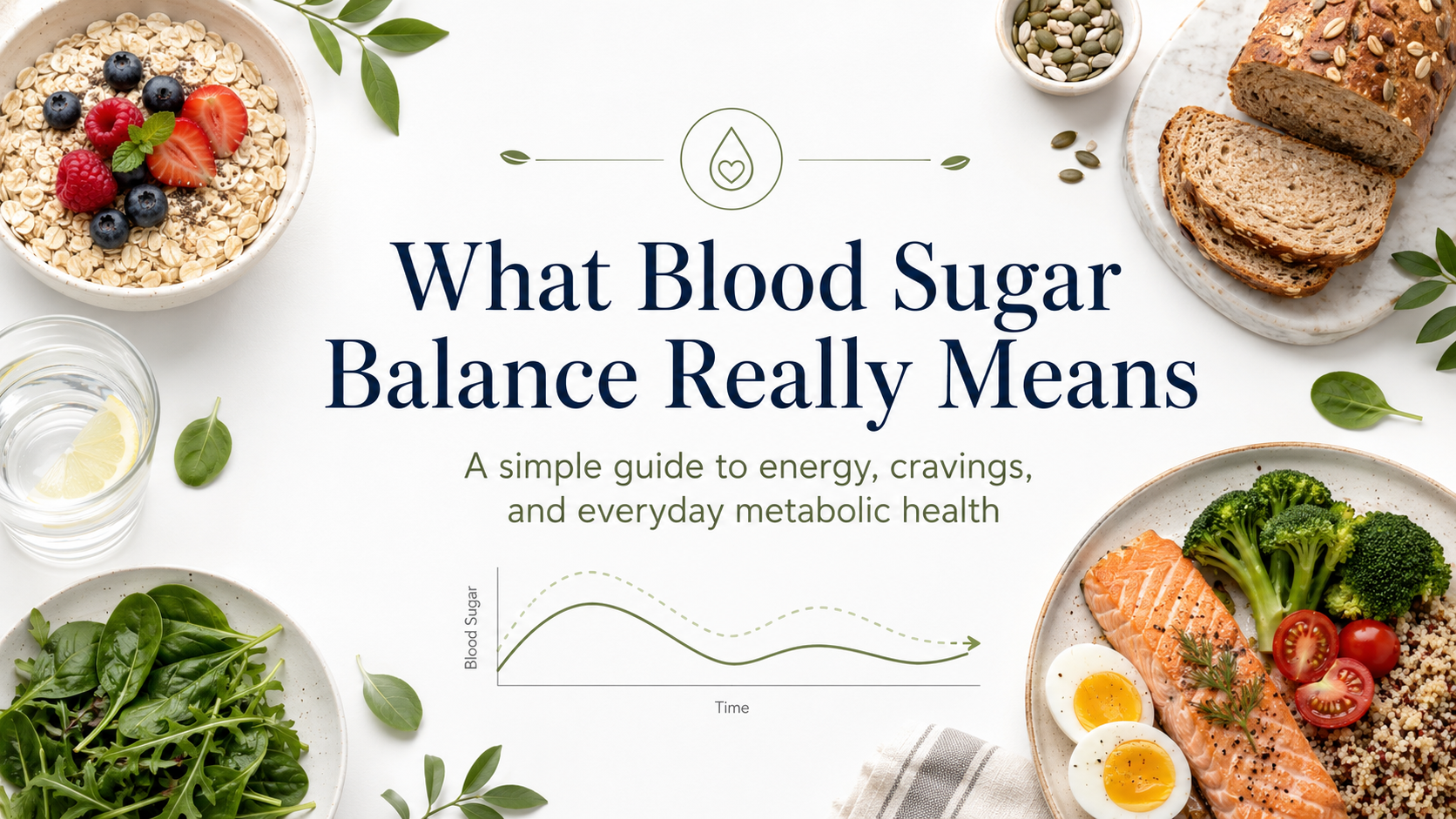
What Is Blood Sugar Balance and Why Does It Matter? — A UK Guide for Everyday Health
 By Team Care and Cure
You had lunch around one o’clock. By half past three, you are flat. The screen is harder to focus on, the next task feels heavier than it should, and a biscuit suddenly seems like a very reasonable idea.
That mid-afternoon dip is one of the most universal experiences in working life — and for most people, it has a great deal to do with what their blood sugar has been doing in the previous two hours.
“Blood sugar balance” has become a popular phrase in UK wellness. It appears on supplement labels, in podcasts, and across health columns. But it is also a phrase that gets used loosely, and the gap between what it actually means and what it is often made to mean is wide.
This article explains what blood sugar balance is, why it matters for everyday energy and longer-term health, what genuinely influences it, and when changes in blood sugar warrant a conversation with your GP rather than a change to your shopping basket.
What is blood sugar balance — and what is the body actually doing?
Blood sugar — more precisely, blood glucose — is the small amount of sugar circulating in your bloodstream at any given moment, ready to fuel your cells.
When you eat, especially carbohydrates, glucose rises. Your pancreas releases a hormone called insulin. Insulin acts like a key, opening cells across the body so that glucose can move in from the blood and be used for energy or stored for later. Once enough glucose has been taken up, levels return to a steady baseline. A few hours later, when fuel is needed again, the body releases glucose from storage and the cycle continues.
So “balance” is the right word. The body is not trying to keep blood glucose flat — it is meant to rise and fall. What it is trying to do is keep those rises and falls within a healthy range, and to bring glucose back to baseline efficiently after each meal.
When that system works well, you are largely unaware of any of it. When it works less efficiently, the swings become larger and longer. Sharp post-meal peaks are followed by sharper dips. Energy becomes uneven. Hunger and cravings become harder to read. And over time, the underlying machinery — insulin sensitivity, the response of insulin-producing cells, the way different tissues handle glucose — can begin to show wear.
Summary: Blood sugar balance is the body’s ability to keep glucose within a healthy range after meals and between them — not to keep it flat, but to manage its rises and falls efficiently. When that works well, energy feels even and you are not aware of the system at all.
Why blood sugar balance matters for energy, mood, and long-term health
The short-term story is energy and focus. The longer-term story is metabolic health.
Day to day, big swings in blood glucose tend to track with how steady your energy feels. A breakfast that triggers a sharp rise and then a fast drop can leave you flat by mid-morning. A long stretch without food can leave you frayed and irritable. None of this is unusual or alarming — it is part of how the system behaves under load. But people whose blood glucose swings less tend to describe steadier energy, fewer cravings, and a more even mood through the day. Even fairly modest changes to eating and movement habits can shift this pattern noticeably.
The longer-term story is the one that actually matters most.
When the body has to release a lot of insulin, a lot of the time, the cells that respond to insulin can gradually become less sensitive to it. This is insulin resistance — a state in which the body needs to produce more and more insulin to achieve the same effect. Over years, insulin resistance is the central process behind type 2 diabetes, and it sits in the background of a range of other metabolic conditions. Catching the drift early — when habits can still influence it — is far easier than reversing it later.
This is also why blood sugar balance matters more from the mid-40s onwards. Insulin sensitivity tends to decline gradually with age, lean muscle mass — which is metabolically active — tends to decrease unless actively maintained, and lifestyle patterns laid down over years start to compound. None of this is destiny. But it is a useful reason to take the topic seriously while you have the most leverage over it.
Summary: Steady blood sugar tracks with steady energy and mood in the short term. In the longer term, repeated large blood-glucose swings drive insulin resistance — the process behind type 2 diabetes. Both are reasons to take the topic seriously from the mid-40s onwards.
The foods, habits, and patterns that influence blood sugar most
Most of the day-to-day variation in blood sugar comes from a small number of factors. Each one is well-established. None of them is dramatic in isolation.
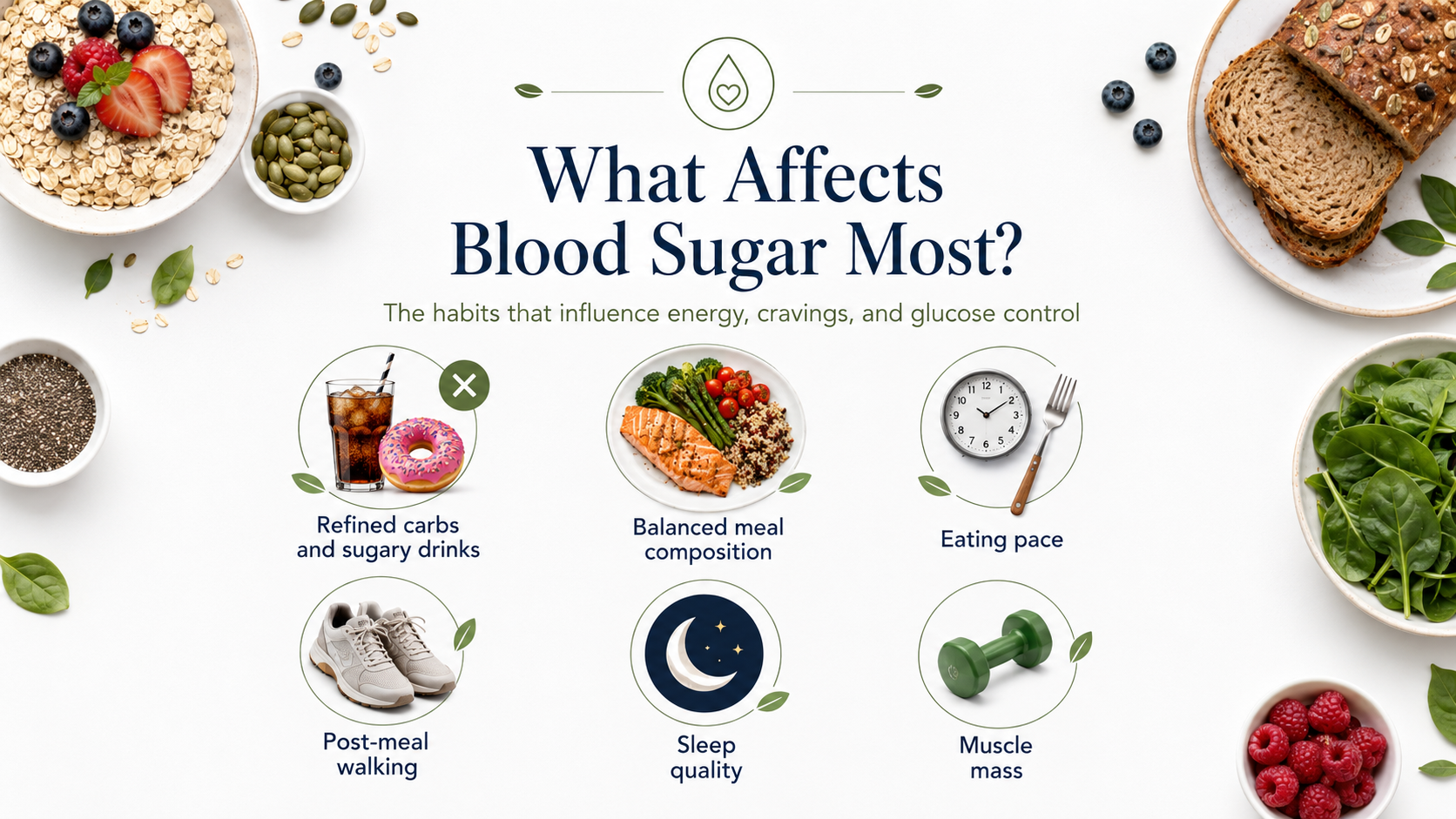
Carbohydrate type and quantity. Carbohydrates have the most direct effect on blood glucose. The kind matters as much as the amount: refined carbohydrates and sugary drinks raise glucose quickly, while wholegrains, pulses, vegetables, and fruit do so more slowly because they come with fibre, protein, or both. A plate built around wholefood carbohydrates produces a flatter, more sustained response than the same calories from refined ones.
Meal composition. Carbohydrate eaten on its own tends to produce a faster rise. The same carbohydrate eaten with protein, healthy fats, and vegetables produces a gentler one. This is one of the simplest practical levers most people have.
Eating pace. Eating quickly tends to produce a more pronounced post-meal glucose rise than eating the same food slowly. Chewing properly and putting the cutlery down between bites is a free and surprisingly effective adjustment.
Movement after meals. Walking for ten to fifteen minutes after a meal noticeably reduces the post-meal glucose peak. Muscle takes up glucose directly when it is being used, which is part of why even gentle activity has a measurable metabolic effect.
Sleep. Short or broken sleep makes the next day’s glucose response worse — even in people who are otherwise healthy. A single bad night can affect glucose handling the following morning.
Stress. Sustained psychological stress raises cortisol, which in turn nudges glucose up. Brief stress is part of normal life. Chronic, unrelieved stress is the version that influences metabolic health.
Overall body composition and lean muscle. Muscle is the body’s largest sink for glucose. People who maintain or build muscle through their 40s and beyond tend to have more efficient blood sugar handling than those who don’t, independent of weight.
Summary: The biggest day-to-day influences on blood sugar are the type and quantity of carbohydrate, meal composition, eating pace, post-meal movement, sleep, stress, and muscle mass. None is dramatic alone. Together, they explain most of the variation most people experience.
When changes in blood sugar warrant a conversation with your GP
Some patterns are worth taking seriously and bringing to your GP rather than addressing through diet alone.
Make an appointment with your GP if you notice any of the following:
- Feeling thirsty much more often than usual
- Passing urine more often than usual, particularly at night
- Unexplained weight loss
- Persistent tiredness that does not improve with rest
- Wounds, cuts, or skin infections that are slow to heal
- Blurred vision that comes and goes
- Recurrent thrush or genital itching
- A close family history of type 2 diabetes, particularly if you are over 40
- Being told at a previous health check that you had “borderline” or “pre-diabetic” blood sugar
- A history of gestational diabetes during pregnancy
Seek urgent medical care for a combination of intense thirst, frequent urination, drowsiness or confusion, deep rapid breathing, or fruity-smelling breath — these can point to dangerously high blood sugar and require immediate assessment.
The standard NHS check for blood sugar over recent months is a blood test called HbA1c, which reflects average blood glucose over the previous two to three months. [1] In the UK, adults over 40 are also eligible for a free NHS Health Check every five years, which includes a diabetes risk assessment — worth knowing about, and worth using. [2] If a risk assessment or HbA1c suggests pre-diabetes, GP practices in England can refer eligible adults to the NHS Healthier You: Diabetes Prevention Programme, a structured nine-month lifestyle support programme with strong outcomes. [3]
Summary: Excessive thirst, frequent urination, unexplained weight loss, persistent tiredness, slow-healing wounds, blurred vision, or a strong family history of diabetes should always be discussed with your GP — and adults over 40 in the UK are eligible for free NHS Health Checks every five years.
What can you do day to day to support healthy blood sugar?
Most of what makes the biggest difference is unglamorous, free, and consistent.
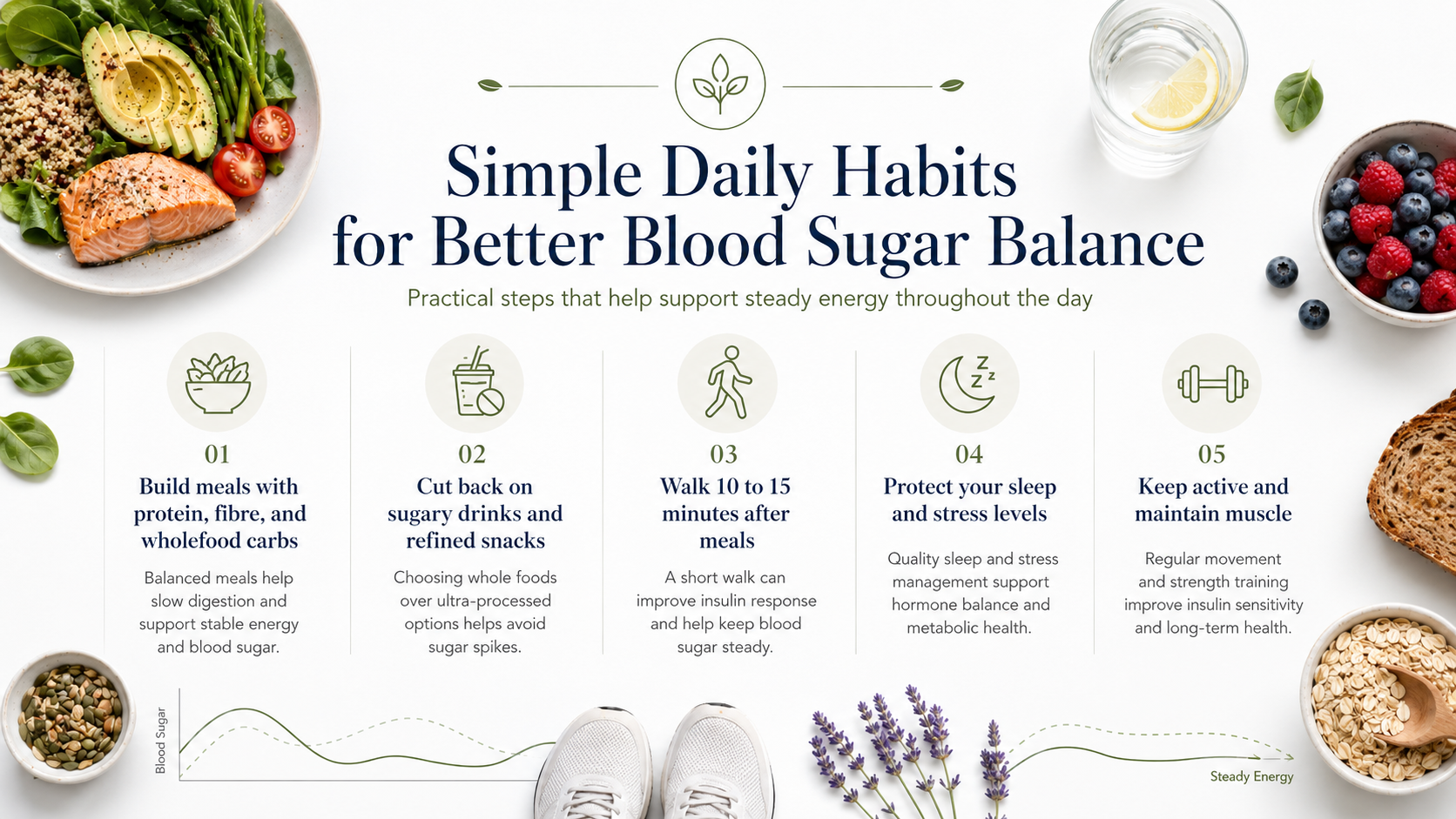
Build meals around wholefood carbohydrates, protein, and vegetables. Wholegrains, pulses, vegetables, fruit, fish, eggs, dairy or fortified alternatives, and adequate protein at each meal — this is the foundation. A plate that has all three (wholefood carbs, protein, vegetables) produces a gentler glucose response than the same calories built around refined carbohydrates.
Reduce sugary drinks and refined snacks. Of all the dietary changes available, this is the one that consistently does the most.
Walk after meals. Ten to fifteen minutes is enough to make a measurable difference to the post-meal glucose peak. It does not need to be vigorous.
Move regularly and keep muscle. A mix of moderate cardiovascular activity and some form of resistance training — even bodyweight work — supports insulin sensitivity better than either alone.
Protect your sleep. Aim for a regular bedtime and a wind-down routine. Sleep quality affects next-day glucose handling more than most people realise.
Drink water, not sugary drinks, with meals. Hydration matters in its own right, and it removes a common source of unnecessary glucose load.
Get the free NHS Health Check if you are eligible. Knowing your numbers — particularly HbA1c, blood pressure, and cholesterol — is the foundation everything else sits on.
For adults who want to support normal blood glucose metabolism nutritionally alongside diet and lifestyle, several nutrients have authorised UK and EU roles. Chromium contributes to the maintenance of normal blood glucose levels and to normal macronutrient metabolism under the EFSA-authorised wording. [4] Magnesium contributes to normal energy-yielding metabolism and to the reduction of tiredness and fatigue. [5] Both are nutrients in which many UK adults are below the optimum dietary intake.
Diacare from Care & Cure Nutraceuticals is a broad-spectrum formula combining chromium (as chromium niacinate), magnesium (as magnesium citrate), alpha lipoic acid, berberine sulfate, taurine, vanadyl sulfate, and N-acetyl L-cysteine in a single daily formula. The chromium content provides the authorised nutritional role; the wider profile is included to support normal macronutrient metabolism as part of a varied and balanced diet.
An important note before considering Diacare: several compounds in this formula — including berberine — have been studied in the context of blood glucose. If you take any prescription medication for blood sugar, or any anticoagulant (blood-thinning) medication, you must speak to your GP or diabetes care team before starting Diacare or any similar supplement. A supplement that influences glucose alongside a medicine that also influences glucose can require dose review. This is not optional. Diacare is also not suitable during pregnancy or breastfeeding without specialist supervision.
Summary: The most effective day-to-day support for blood sugar is wholefood meals, fewer sugary drinks, post-meal walks, regular movement, good sleep, and knowing your numbers. Nutrients including chromium and magnesium have authorised UK roles in normal glucose and energy metabolism — but anyone on prescription blood sugar or anticoagulant medication must speak to their GP before adding a supplement.
Why blood sugar balance becomes harder with age
It is worth understanding that the body’s handling of glucose is not the same at 25 and at 55.
Insulin sensitivity tends to decline gradually with age. Lean muscle, which is the body’s largest sink for glucose, also tends to decrease unless actively maintained through regular resistance work. Patterns of eating, sleep, and activity laid down over decades start to express themselves more visibly. The result, for many adults, is that the same diet that produced steady energy at thirty starts producing more pronounced swings by the mid-forties.
None of this is a disease. It is a normal age-related drift — but it is one that responds well to the same set of habits that matter at any age, applied a little more consistently. Maintaining muscle, walking after meals, protecting sleep, and keeping refined carbohydrates as a small part of the diet rather than the centre of it all do useful work in this decade and the next.
For adults who are already eating and moving well, and who simply want nutritional support for normal glucose and energy metabolism, a formula like Diacare is one option among several to discuss with a healthcare professional. The lifestyle work, though, is what does most of the lifting — and what almost no supplement is a substitute for.
Summary: Insulin sensitivity and muscle mass tend to decline gradually with age, which is part of why blood sugar balance feels harder to maintain from the mid-40s onwards. The same lifestyle foundations matter even more in this decade — and lifestyle, not a supplement, does most of the work.
The bottom line
Blood sugar balance is one of the most useful concepts in everyday metabolic health — but it is not a mystery, and it is not a problem to be solved with a single product.
The body is designed to handle the rise and fall of glucose throughout the day. When that works well, energy feels even and you are largely unaware of any of it. When it works less well, swings become more pronounced and, over years, the underlying machinery can show wear. The most reliable levers are familiar: wholefood meals, fewer sugary drinks, post-meal walks, regular movement that maintains muscle, decent sleep, and using the free NHS Health Check if you’re eligible.
Persistent thirst, frequent urination, unexplained weight loss, slow-healing wounds, or a strong family history of diabetes is always a conversation to have with your GP — not your supplement shelf.
Frequently asked questions
What does “blood sugar balance” actually mean? It means the body’s ability to keep blood glucose within a healthy range — rising after meals, falling between them, and returning to baseline efficiently. The goal is not to keep glucose flat, but to keep its rises and falls within a healthy range.
How do I know if my blood sugar is out of balance? The most reliable check is an HbA1c blood test through your GP, which reflects average blood sugar over two to three months. Symptoms such as excessive thirst, frequent urination, unexplained tiredness, blurred vision, or slow-healing wounds should always be discussed with a GP rather than self-assessed.
What foods are best for blood sugar balance? Meals built around wholegrains, pulses, vegetables, fruit, fish, eggs, dairy or fortified alternatives, and adequate protein produce gentler post-meal glucose responses than meals built around refined carbohydrates or sugary drinks. Composition — combining carbs with protein and vegetables — matters as much as individual food choices.
Does walking after meals really help blood sugar? Yes. A ten- to fifteen-minute walk after a meal noticeably reduces the post-meal glucose peak, because working muscle takes up glucose directly. It does not need to be vigorous — gentle is the point.
Can supplements help support healthy blood sugar? Some nutrients — including chromium and magnesium — have UK and EU authorised roles in normal blood glucose and energy metabolism. They are not a substitute for diet, movement, sleep, and medical care. If you take prescription medication for blood sugar, always speak to your GP or diabetes care team before adding any supplement that could influence glucose.
This article is for informational purposes only and does not constitute medical advice. Always consult a qualified healthcare professional before starting any new supplement, particularly if you are pregnant, breastfeeding, taking medication, or have a diagnosed medical condition. Food supplements are not intended to diagnose, treat, cure, or prevent any disease.
References
1. National Health Service (UK). Type 2 diabetes: getting diagnosed. NHS. nhs.uk/conditions/type-2-diabetes/getting-diagnosed
2. National Health Service (UK). NHS Health Check. NHS. nhs.uk/conditions/nhs-health-check
3. NHS England. Healthier You: NHS Diabetes Prevention Programme. NHS England. england.nhs.uk/diabetes/diabetes-prevention
4. EFSA Panel on Dietetic Products, Nutrition and Allergies (NDA) (2010). Scientific Opinion on the substantiation of health claims related to chromium and contribution to normal macronutrient metabolism (ID 260, 401, 4665, 4666, 4667), maintenance of normal blood glucose concentrations (ID 262, 4667) … pursuant to Article 13(1) of Regulation (EC) No 1924/2006. EFSA Journal. 8(10):1732. doi:10.2903/j.efsa.2010.1732
5. EU Register on Nutrition and Health Claims. Magnesium — contribution to normal energy-yielding metabolism and to the reduction of tiredness and fatigue (authorised, Commission Regulation (EU) 432/2012). European Commission Food Safety. ec.europa.eu/food/food-feed-portal/screen/health-claims
