Immune Defence
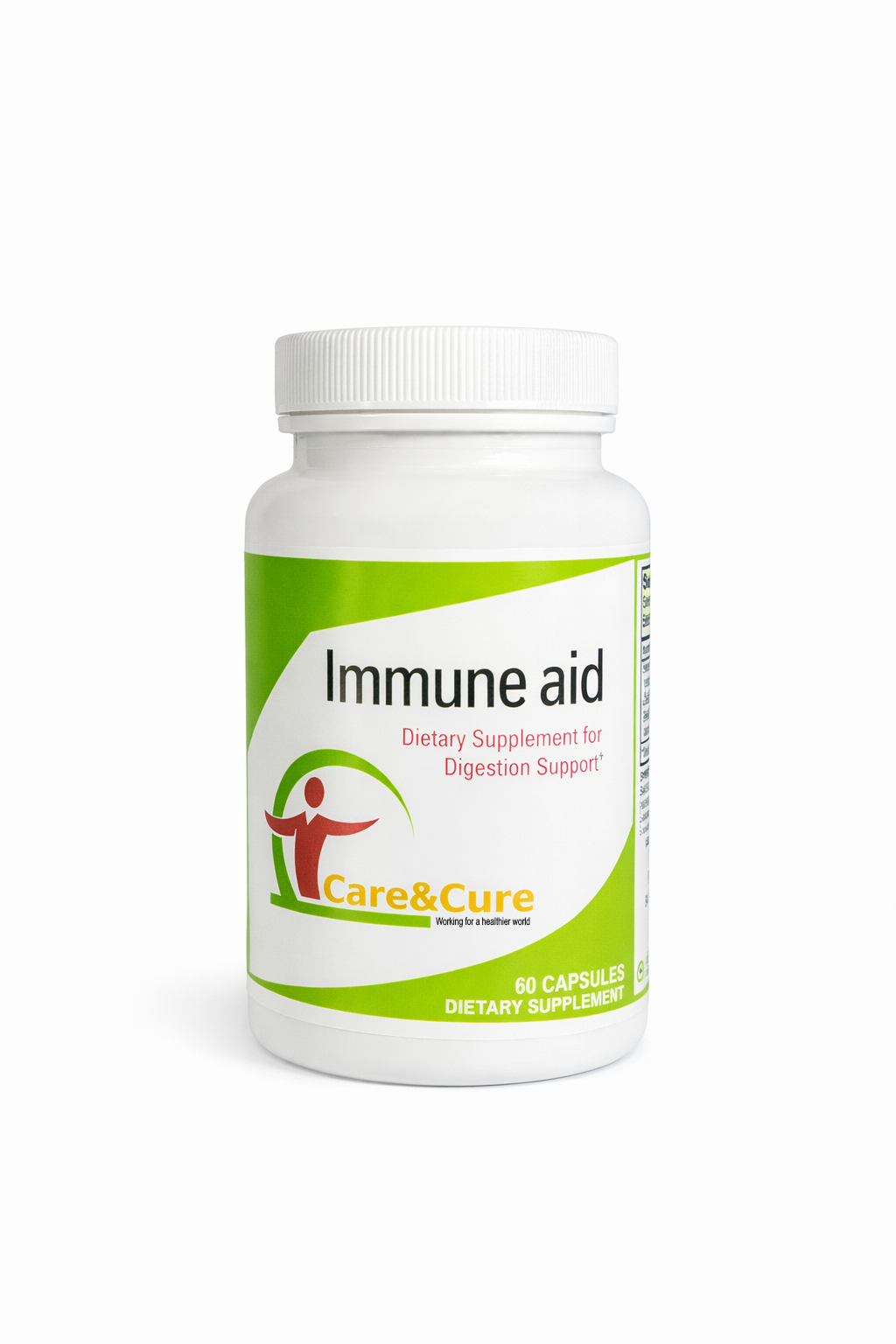
Immune aid Multi-Strain Probiotic Supplement | Gut Health | 60 Capsules
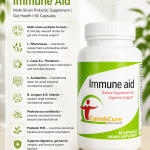
- Multi-strain probiotic coverage — 8 clinically relevant strains targeting digestion, immunity, gut barrier integrity, and microbial diversity simultaneously
- L. Rhamnosus — one of the most extensively researched Lactobacillus strains in nutritional science, included as the anchor species of the Immune Aid™ formula
- L. Casei — an acid-resistant Lactobacillus strain well-studied for its colonisation profile in the upper digestive tract
- L. Plantarum — one of the most robust Lactobacillus strains in terms of established research profile and colonisation range
- L. Acidophilus — a foundational small intestinal Lactobacillus species and one of the most widely studied probiotic strains available
- B. Longum and B. Infantis — two well-studied Bifidobacterium species providing large intestinal coverage alongside the Lactobacillus layer
- Pediococcus acidilactici — an additional lactic acid-producing species included to extend microbial coverage beyond standard Lactobacillus-Bifidobacterium formulas
- Prebiotic FOS — feeds the delivered strains directly, accelerating establishment and improving durability
- 60 capsules — a full 60-serving, two-month supply at one capsule per day
£ 30.00
Vegetarian
Product Features & Quality Assurance
- • GMP Certified — consistent quality and potency guaranteed across every batch
- • Made in the USA — manufactured to pharmaceutical-grade standards
- • Vegetable capsule — Hypromellose shell suitable for vegetarians
- • Quality and Potency Guaranteed — no artificial colours, no preservatives
- • Multi-strain formula — 8 probiotic strains plus prebiotic FOS for colonisation support
- • 60 capsules — a full 60-serving, two-month supply at one capsule per day
Immune aid™ is a multi-strain probiotic supplement formulated to support digestion and gut health in adults. Each serving delivers one capsule containing a 4.5 BCFU Care & Cure Proprietary Blend of eight clinically relevant probiotic strains — L. Rhamnosus, L. Casei, L. Plantarum, L. Acidophilus, B. Longum, B. Infantis, Pediococcus acidilactici, and Lactococcus — alongside Fructooligosaccharides (FOS) as a prebiotic substrate to support probiotic colonisation and activity.
Probiotic supplements produce their strongest benefits when the strains they contain are both clinically studied and diverse enough to colonise across the full length of the digestive tract. Immune aid™ combines Lactobacillus strains — which operate primarily in the small intestine — with Bifidobacterium strains that colonise the large intestine, alongside Pediococcus and Lactococcus for broad-spectrum microbial coverage. The addition of FOS provides the prebiotic fuel these bacteria need to establish and maintain their populations after supplementation begins.
Gut microbiome disruption is more widespread — and its signals more easily dismissed as normal — than most people appreciate. You may benefit from Immune aid™ if you experience any of the following:
- Bloating, gas, or unpredictable digestive discomfort — especially after meals or in the afternoon
- Those who want to support everyday digestive comfort and gut microbiome diversity as part of a consistent nutritional routine
- A recent or repeated course of antibiotics, which deplete beneficial gut bacteria broadly and rapidly
- Frequent colds, slow immune recovery, or a general sense of reduced immune resilience
- A diet high in processed foods, low in fermented foods, or low in dietary fibre
- Chronic stress — which directly suppresses beneficial Lactobacillus and Bifidobacterium populations through cortisol-mediated mechanisms
- A desire to support everyday gut comfort and digestive regularity as part of a long-term nutritional routine
- A desire to support gut health proactively, particularly following dietary changes, travel, or illness.
Immune aid™ is built around the understanding that gut health requires microbial diversity — not just volume. Different probiotic strains colonise different regions of the digestive tract, perform different regulatory functions, and support different aspects of immune and digestive health. The Care & Cure Proprietary Blend provides coverage across all of them.
L. Rhamnosus anchors the formula with the most researched Lactobacillus strain — L. Rhamnosus is among the most extensively studied probiotic strains in nutritional science, with a strong published research profile and well-characterised intestinal colonisation properties. It adheres strongly to intestinal epithelium, competing with pathogens for colonisation sites and producing lactic acid that lowers gut pH to an environment unfavourable to harmful organisms. This is the mechanism behind the reduction in post-antibiotic digestive disruption that users consistently report.
L. Casei extends Lactobacillus coverage into the upper digestive tract — L. Casei survives the acidic conditions of the stomach and upper small intestine more reliably than many probiotic strains, making it particularly effective at establishing early colonisation before bacteria reach the lower gut. L. Casei is studied for its colonisation profile in the upper digestive tract and its reliable acid resistance, making it one of the most widely included strains in multi-species probiotic formulas — the immune network that lines the intestinal wall and accounts for approximately 70% of the body’s immune activity.
L. Plantarum provides the gut barrier protection the formula depends on — L. Plantarum is one of the most robust Lactobacillus strains in terms of gut barrier support. L. Plantarum is one of the most robust and versatile Lactobacillus strains, with a well-documented colonisation range and a strong research presence across diverse gut wellness nutritional studies. L. Plantarum directly addresses this structural vulnerability.
L. Acidophilus supports small intestinal colonisation and lactose tolerance — L. Acidophilus is a foundational small intestinal probiotic — one of the dominant beneficial species in a healthy gut microbiome. It produces lactase, supporting dairy digestion in people with mild lactose sensitivity. L. Acidophilus produces lactic acid and other compounds that contribute to the acidic gut environment in which beneficial probiotic species thrive — and contributes to the lactic acid environment that discourages dysbiotic organisms. This is why Acidophilus-containing probiotics are associated with reduced bloating after dairy-containing meals.
B. Longum and B. Infantis colonise the large intestine where Lactobacillus cannot reach — Bifidobacterium species are the dominant beneficial bacteria in the large intestine — a region that Lactobacillus strains do not colonise effectively. B. Longum is one of the most prevalent Bifidobacterium species in healthy adults and declines significantly with age. Bifidobacterium species are the dominant beneficial bacteria in the large intestine — a region that Lactobacillus strains do not colonise as effectively. B. Longum and B. Infantis are two of the most extensively studied Bifidobacterium strains in nutritional research.
Pediococcus acidilactici adds competitive exclusion activity against pathogens — Pediococcus acidilactici is a lactic acid-producing species included to extend the formula's microbial coverage beyond the standard Lactobacillus-Bifidobacterium core, broadening the range of bacterial families represented in each serving from colonisation sites throughout the digestive tract. This is the mechanism that makes multi-strain probiotics consistently more effective than single-strain formulas in reducing pathogenic bacterial load.
Lactococcus completes the streptococcus lactic acid producer network — Lactococcus strains are lactic acid bacteria that support the acidic gut environment in which beneficial species thrive and pathogens struggle. Their inclusion rounds out the Immunaid™ formula’s coverage of the lactic acid producing community — ensuring that the pH modulation and competitive exclusion mechanisms operate across the full microbial diversity that a healthy gut requires.
Fructooligosaccharides (FOS) feed the bacteria the formula delivers — FOS are prebiotic fibres that selectively feed Lactobacillus and Bifidobacterium species — the exact strains in the Immunaid™ blend. Without a prebiotic substrate, probiotic bacteria face the challenge of establishing themselves in an environment that may not provide the nutrients they need to thrive. FOS solves this problem from within the capsule, providing the fuel that probiotic colonisation depends on from the moment supplementation begins. This is the mechanism behind the faster establishment and more durable colonisation that prebiotic-containing probiotics produce compared to probiotic-only formulas.
Care & Cure Proprietary Blend (L. Rhamnosus, L. Casei, L. Plantarum, L. Acidophilus, B. Longum, B. Infantis, Pediococcus acidilactici, Lactococcus).
Other Ingredients: Fructooligosaccharides (FOS), Magnesium Silicate, Magnesium Stearate (Vegetable), Hypromellose (Vegetable Capsule).
No artificial colours. No preservatives. Quality and Potency Guaranteed.
Take 1 capsule twice daily, preferably on an empty stomach, though it may be taken with food or as directed by your healthcare professional. For best results, take at consistent times each day — morning and evening — to maintain stable probiotic populations across the full 24-hour cycle. Do not exceed the recommended daily intake unless advised by your doctor.
Do not use if the tamper-evident seal is broken or missing. Keep out of reach of children. Store tightly closed in a cool, dry place.
Warning: Do not use this product if you are pregnant, nursing, or have a history of allergies, or if you are using anticoagulant (blood thinning) medications without first consulting your doctor or other healthcare professional. Do not consume this product within 2 hours of a medication dose. Exceeding the recommended serving size may result in gastrointestinal discomfort.
Serving Size: 1 Capsule | Servings per Container: 60
| Ingredient | Amount | % DV |
|---|---|---|
| Care & Cure Proprietary Blend: L. Rhamnosus, L. Casei, L. Plantarum, L. Acidophilus, B. Longum, B. Infantis, Pediococcus acidilactici, Lactococcus | 4.5 BCFU | * |
FAQs About Immune aid and Probiotic Supplements
Immune aid is a multi-strain probiotic supplement formulated to support digestion and gut health in adults. It delivers 8 clinically relevant probiotic strains u2014 spanning Lactobacillus, Bifidobacterium, Pediococcus, and Lactococcus species u2014 alongside prebiotic FOS to support colonisation. It is particularly beneficial for those experiencing bloating, irregular digestion, reduced immune resilience, or anyone recovering from antibiotic use.
Immune aid contains 8 probiotic strains: L. Rhamnosus, L. Casei, L. Plantarum, L. Acidophilus, B. Longum, B. Infantis, Pediococcus acidilactici, and Lactococcus u2014 delivering 4.5 BCFU per capsule. The formula spans Lactobacillus strains for small intestinal coverage, Bifidobacterium strains for large intestinal coverage, and additional lactic acid producing species for broad-spectrum microbial activity throughout the digestive tract.
Fructooligosaccharides (FOS) are prebiotic fibres that selectively feed Lactobacillus and Bifidobacterium species u2014 the exact strains delivered in the Immunaidu2122 blend. Prebiotics provide the nutritional substrate that probiotic bacteria need to establish and maintain their populations after supplementation. Without a prebiotic, probiotic strains must compete for available nutrients in the gut environment. Including FOS within the capsule gives the delivered bacteria their optimal start from the moment they are released.
Take 1 capsule twice daily, preferably on an empty stomach u2014 though it may be taken with food if preferred. Consistent timing matters more than the precise relationship to meals. Morning and bedtime are reliable anchors that align with existing habits and maintain stable probiotic populations across the full 24-hour cycle. If you are taking antibiotics, separate Immune aid by at least 2 hours from each antibiotic dose.
Yes. Immune aid uses a Hypromellose vegetable capsule shell and Magnesium Stearate from vegetable sources. The formula contains no animal-derived ingredients and is suitable for vegetarians. Vegans should note that probiotic strains are typically grown on dairy-containing growth media during manufacturing, which may leave trace dairy residues u2014 though the capsule itself contains no dairy ingredients.
Yes u2014 with timing caution. Take Immune aid at least 2 hours away from each antibiotic dose to avoid the antibioticu2019s peak concentration reducing the delivered probiotic colony. Antibiotic courses deplete beneficial gut bacteria broadly u2014 continuing Immune aid throughout the course and immediately after completion is one of the most effective ways to limit the microbiome disruption that antibiotics cause and accelerate restoration once the course ends.
Most users report a noticeable improvement in bloating, digestive regularity, and post-meal comfort within four to six weeks of consistent daily use. Many users find that consistent daily probiotic supplementation contributes to broader digestive and general wellness over time u2014 individual responses vary, and results are best assessed over a two to three month period of consistent use as gut-associated immune modulation develops more slowly than local digestive symptom relief. Consistent twice-daily dosing produces better results than sporadic use.
Immune aid is available directly from Care & Cure Nutraceuticals at www.careandcure.co.uk. It is manufactured in the USA to GMP-certified standards and dispatched from London, UK.
Customer Reviews
⭐ No reviews yet — be the first to share your experience with this product.
Share Your Experience
Your honest review helps other UK customers make the right choice for their health.