
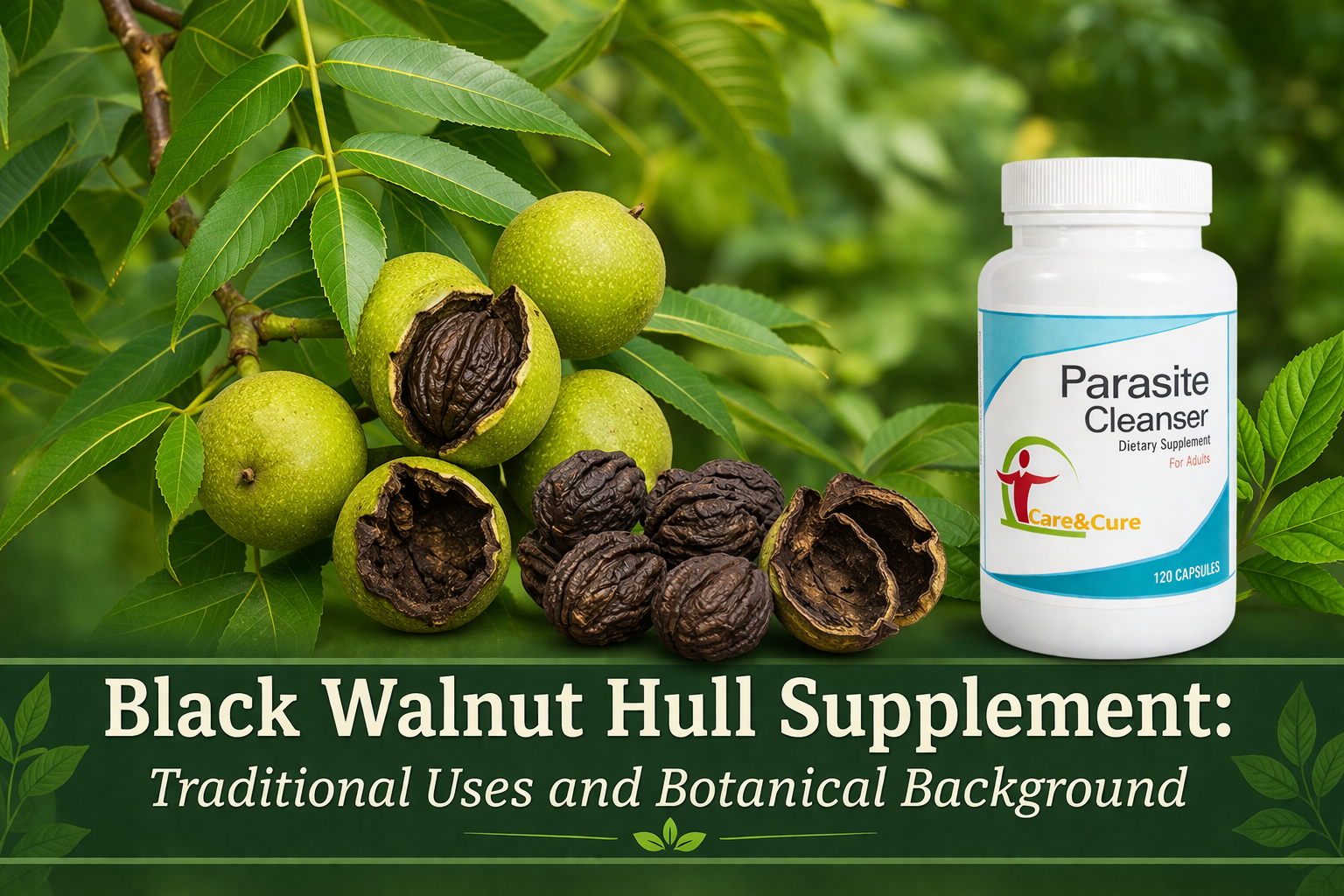
Black Walnut Hull Supplement: Traditional Uses and Botanical Background
 By Dr. Wali
You’ve probably seen it on the label of herbal cleanse and gut health formulas. But what exactly is Black Walnut Hull, where does it come from, and why has it been used in herbal medicine for centuries? This guide covers everything you need to know about the botanical background and traditional uses of Black Walnut Hull supplement, in plain English.
What Is Black Walnut Hull?
Black Walnut Hull comes from the outer green casing of the Black Walnut (Juglans nigra), a large deciduous tree native to North America. The hull is the thick, fleshy outer layer that encases the walnut shell before the nut matures. It is distinct from the walnut shell itself and from the nut inside.
The key word is green. When harvested at the right stage, the hull is bright green, firm, and rich in the bioactive compounds that make it valuable in herbal medicine. As the hull matures and falls from the tree, it turns black and its compound profile changes significantly. This is why quality Black Walnut Hull supplements specify that the green hull is used, and why harvesting timing matters.
The outer green hull of the Black Walnut is one of the most distinctive and studied botanicals in North American herbal medicine. It stains everything it touches dark brown — which gives you an indication of just how concentrated its active compounds are.
A Brief History of Black Walnut in Herbal Medicine
Black Walnut has been used medicinally for well over a thousand years. Native American peoples across eastern and central North America were among the first to document its uses, employing the hull, bark, leaves, and nut in a wide range of traditional health applications.
European settlers arriving in North America quickly adopted Black Walnut into their own herbal traditions. By the 18th and 19th centuries it had become a well-established ingredient in the Eclectic and Thomsonian herbal medicine systems that were popular across the United States. It appeared frequently in herbal dispensatories — the medical reference texts of the era — where it was categorised as an alterative (a herb that gradually improves systemic health) and an anthelmintic (a herb traditionally used to support the elimination of intestinal unwanted guests).
In European herbal practice, Black Walnut became a transatlantic addition to formulas that already included traditional European herbs like Wormwood and Clove. These three herbs became the foundational trio of what herbalists came to call intestinal cleanse or parasite cleanse protocols, a tradition that continues in modern herbal supplementation today.
By the 20th century, the American herbalist Hulda Clark had brought widespread public attention to Black Walnut Hull through her writings on herbal cleansing. Whether or not her specific claims were clinically verified, her work significantly increased public awareness of this botanical and introduced it to a new generation of people interested in natural health.
What’s Inside the Hull? Key Compounds
The traditional reputation of Black Walnut Hull is built on its chemistry. The hull is chemically complex, but four groups of compounds are particularly relevant to understanding its properties.
Juglone
Juglone (5-hydroxy-1,4-naphthoquinone) is the primary bioactive compound in Black Walnut hull and the one most studied by researchers. It is a naphthoquinone — a class of organic compounds known for antimicrobial activity. Juglone is responsible for the characteristic dark staining you get from handling Black Walnut hull, and it is the compound that has attracted the most scientific interest.
In nature, juglone serves the tree as a biochemical defence. It is released into the soil around the Black Walnut tree to inhibit the growth of competing plants — a process called allelopathy. This natural pesticidal and antimicrobial function in the plant world is one reason traditional herbalists valued the hull so highly for its potential effects on unwanted microorganisms in the human body.
The green hull contains significantly higher juglone concentrations than the mature or dried hull. This is why the harvesting stage is so important for supplement quality.
Tannins
Black Walnut Hull is exceptionally rich in tannins, a broad class of polyphenol compounds responsible for the astringent taste of many plants. Tannins have well-studied antimicrobial and antioxidant properties. They bind to and precipitate proteins, which gives them their characteristic astringency — the dry, puckering sensation you get from strong tea or unripe fruit.
In the gut, tannins create an inhospitable environment for certain microorganisms by binding to their surface proteins. This is one of the mechanisms through which traditional herbalists understood Black Walnut Hull to support a healthy gut microenvironment.
Iodine
Black Walnut Hull is a notable natural source of iodine, an essential mineral that most of us associate with thyroid health. Iodine’s presence in the hull adds another dimension to its traditional uses: iodine has well-established antimicrobial and antiseptic properties, which is why it appears in wound-cleaning preparations.
The iodine content is part of what traditional herbalists believed gave Black Walnut Hull its broad spectrum activity against a range of microorganisms, adding to the action of juglone and the tannin complex.
Omega-3 Fatty Acids (in the nut)
It is worth noting that the walnut itself, as opposed to the hull, is one of the richest plant-based sources of alpha-linolenic acid (ALA), the plant form of omega-3 fatty acids. This is the basis for the Black Walnut’s general reputation as a nutritionally valuable tree. The supplement, however, is made from the hull, not the nut, and does not provide significant omega-3 content.
Traditional Uses of Black Walnut Hull
Black Walnut Hull has been applied to a wide range of health concerns across different herbal traditions. Here are the three areas where its traditional use is most well-established.
Gut Health and Intestinal Cleansing
This is the most prominent traditional use of Black Walnut Hull and the reason you most commonly find it in modern herbal supplement formulas. Across Native American, Eclectic, and modern Western herbal medicine, the hull has been used as part of protocols designed to support a healthy intestinal environment.
The combination of juglone, tannins, and iodine creates a broad-spectrum botanical profile that traditional herbalists believed could address unwanted microorganisms — including intestinal worms, fungal overgrowth, and harmful bacteria — in the gut. The tannin content also supports gut wall integrity and helps create an astringent, unfavourable environment for pathogenic organisms.
In modern herbal cleanse protocols, Black Walnut Hull is almost always used alongside complementary botanicals. The classic combination is the trio of Black Walnut Hull, Wormwood (Artemisia absinthium), and Clove Bud, which together are believed to address different stages of microbial life cycles in the gut.
Black Walnut Hull, Wormwood, and Clove form the most traditional trio in Western herbal cleansing protocols. Each brings a different mechanism of action, creating broad-spectrum botanical coverage.
Skin Support
The external use of Black Walnut Hull tincture and powder has a long history in traditional herbal medicine for skin conditions associated with fungal or microbial origin. The hull’s high tannin and juglone content give it strong astringent and antimicrobial properties when applied topically.
Historically, Black Walnut Hull preparations were used topically for ringworm (a fungal infection), athlete’s foot, and other skin conditions associated with fungal overgrowth. The dark staining of the hull — unavoidable when working with it — was well known to traditional herbalists and early practitioners.
Antifungal and Antimicrobial Traditions
Beyond the gut and skin, Black Walnut Hull has a documented history of use for its broad antimicrobial activity. Juglone has been studied in laboratory research for its inhibitory effects on a range of bacteria and fungi, including Candida albicans, the fungus responsible for yeast infections and candida overgrowth.
It is important to be clear that laboratory studies showing antimicrobial activity do not automatically translate to equivalent clinical effects in the human body. The research on Black Walnut Hull is primarily in vitro (in lab conditions) rather than large-scale clinical trials. However, the traditional use background across multiple cultures and centuries is extensive and well-documented.
Black Walnut Hull in Modern Herbal Supplement Formulas
Today, Black Walnut Hull appears most commonly in herbal cleanse and gut health formulas. It is rarely sold as a single-ingredient supplement because its traditional use has always been in combination with other botanicals.
The most common formula pairings include:
- Wormwood (Artemisia absinthium) — traditionally used alongside Black Walnut Hull in intestinal cleanse protocols
- Clove Bud (Syzygium aromaticum) — a classic third component in the traditional cleansing trio
- Garlic (Allium sativum) — a broad-spectrum antimicrobial botanical with overlapping traditional uses
- Oregano Leaf Extract — rich in carvacrol and thymol, with well-studied antimicrobial properties
- Goldenseal (Hydrastis canadensis) — a traditional North American herb with berberine content
Care & Cure Parasite Cleanser combines Black Walnut Hulls with Olive Leaf Extract, Berberine Sulfate, Garlic Bulb Extract, Clove Bud Powder, Golden Seal Root Powder, Oregano Leaf Extract, Pumpkin Seed Extract, and Wormwood Leaf Extract in a high-strength 1,400 mg proprietary blend. It represents one of the most comprehensive traditional herbal cleanse formulas in the Care & Cure range.
How to Take Black Walnut Hull Supplement
Black Walnut Hull is available in several forms: capsules, tinctures (liquid extracts), and loose powder. Capsules are the most convenient for daily supplementation and provide consistent, measurable dosing.
When taking capsules, follow the directions on the product label. Black Walnut Hull is typically used as part of a defined herbal protocol rather than ongoing indefinite supplementation. Many traditional practitioners recommend a course of 2 to 4 weeks followed by a break.
- Take with a full glass of water, with or after food
- Follow the label directions and do not exceed the stated dose
- Use as part of a defined herbal cleanse protocol as directed by your healthcare provider or herbalist
- Store tightly sealed in a cool, dry place, away from direct sunlight
Who Should Avoid Black Walnut Hull Supplements?
Black Walnut Hull supplements are not appropriate for everyone. Read the following carefully before use.
Black Walnut Hull is not recommended during pregnancy or breastfeeding. The juglone content and general stimulating effect on the gastrointestinal and immune systems make it inadvisable during these periods.
If you have a tree nut allergy, exercise caution. Although the hull is botanically distinct from the nut itself, cross-reactivity is possible. If you are allergic to walnuts, pecans, or other tree nuts, consult your GP or an allergist before taking any Black Walnut supplement.
Because of its iodine content, individuals with thyroid conditions or who are on thyroid medication should consult their GP before use. High iodine intake can affect thyroid function in susceptible individuals.
Black Walnut Hull may interact with some prescription medications. If you are taking anticoagulants (blood thinners), immunosuppressants, or any other prescription medication, consult your GP before starting any new herbal supplement.
Black Walnut Hull and the Herbal Cleanse Tradition
The concept of intestinal or digestive cleansing is one of the oldest in human health practice. Virtually every traditional medicine system in the world — Ayurvedic, Traditional Chinese Medicine, European herbalism, Native American medicine — has developed practices and botanical preparations directed at the intestinal environment and the removal of harmful organisms.
Black Walnut Hull sits squarely within this tradition. It is not a new supplement trend. It is a botanical with a documented history spanning centuries and multiple cultures. What modern supplementation offers is standardised dosing, quality control, and the ability to combine it with complementary botanicals in verified amounts — things that were not possible with traditional preparations.
If you are interested in herbal cleanse supplementation, it is always worth working with a qualified herbalist, naturopath, or integrative GP who can design a protocol appropriate for your individual health context and who can advise on whether Black Walnut Hull is the right choice for you.
Try It for Yourself
Care & Cure Parasite Cleanser provides Black Walnut Hulls alongside eight complementary traditional herbs in a 1,400 mg proprietary blend. It is available directly from Care & Cure Nutraceuticals at www.careandcure.co.uk, manufactured in the USA to GMP-certified standards and dispatched from our London base.
Looking for digestive enzyme support alongside your herbal cleanse protocol? Enzaid™ offers a once-daily vegetarian digestive enzyme capsule with Bromelain and Betaine HCl, and pairs well with a botanical cleanse routine.
Frequently Asked Questions
What is Black Walnut Hull supplement used for?
Black Walnut Hull has a long history of traditional use in herbal medicine, particularly for gut health and intestinal cleansing protocols. It is rich in juglone, tannins, and iodine — compounds that have been studied for their antimicrobial properties. In modern supplementation it is most commonly found in herbal cleanse formulas alongside complementary botanicals like Wormwood, Clove, and Garlic.
What is juglone in Black Walnut?
Juglone (5-hydroxy-1,4-naphthoquinone) is the primary bioactive compound in the Black Walnut hull. It is a naphthoquinone compound responsible for the hull’s characteristic dark staining and has been studied in laboratory research for its antimicrobial and antifungal properties. The green hull stage contains significantly higher juglone concentrations than the mature black hull.
When is the best time to harvest Black Walnut hull for supplements?
Black Walnut hulls are typically harvested in early to mid-autumn when the outer hull is still bright green and intact before it blackens and falls from the tree. This green stage is when juglone concentration is highest, which is why quality supplement manufacturers specify green Black Walnut Hull extract. The timing and colour of the hull at harvest directly affects the potency of the finished supplement.
Is Black Walnut Hull safe to take?
Black Walnut Hull is generally considered safe for short-term use in healthy adults at recommended amounts. It is not recommended during pregnancy or breastfeeding, and individuals with tree nut allergies should consult their GP before use, as cross-reactivity is possible. Always consult your GP if you are taking any prescription medication, and follow the directions on your supplement label.
Can I take Black Walnut Hull every day?
Most herbal practitioners recommend Black Walnut Hull as part of a defined cleanse protocol of 2 to 4 weeks rather than indefinite daily use. Follow the directions on your supplement label and consider consulting a qualified herbalist or healthcare provider for guidance on the length and frequency of use that is appropriate for your individual needs.
Does Black Walnut Hull supplement contain actual walnuts?
Technically yes — Black Walnut Hull comes from the same tree as the walnut nut (Juglans nigra). The hull is the outer green casing that surrounds the shell, not the nut itself. However, because it comes from the same tree, people with walnut or tree nut allergies should exercise caution and consult their GP before use, as cross-reactivity is possible even with hull-only preparations.