
Why You Feel Bloated After Every Meal — And What’s Actually Causing It
 By Dr. Wali
That heavy, tight, uncomfortable feeling after meals is one of the most common digestive complaints in the UK. But most people have no idea what’s actually causing it — or why it keeps happening regardless of what they eat.
Post-meal bloating rarely has a single cause. It’s usually a sign that something in the digestive process has gone slightly off course. And once you understand what that is, there are practical ways to address it.
This article explains the most common reasons digestion breaks down after meals, what’s happening inside your gut when you bloat, and what you can realistically do about it.
What actually causes bloating after eating?
Bloating after meals is caused by gas accumulating in the digestive tract.
But the more important question is where that gas comes from — and why it forms.
When food isn’t fully broken down in the stomach and small intestine, it arrives in the large intestine still partially intact. The bacteria that live there begin to ferment it. That fermentation produces gas — and gas produces pressure, distension, and the familiar discomfort most people simply call “bloating.”
So the problem usually isn’t the food itself. It’s whether your body has the digestive capacity to process it properly before it reaches the colon.
Summary: Post-meal bloating is most commonly caused by undigested food fermenting in the large intestine. The root issue is typically incomplete digestion in the stomach or small intestine — not the food you’re eating.
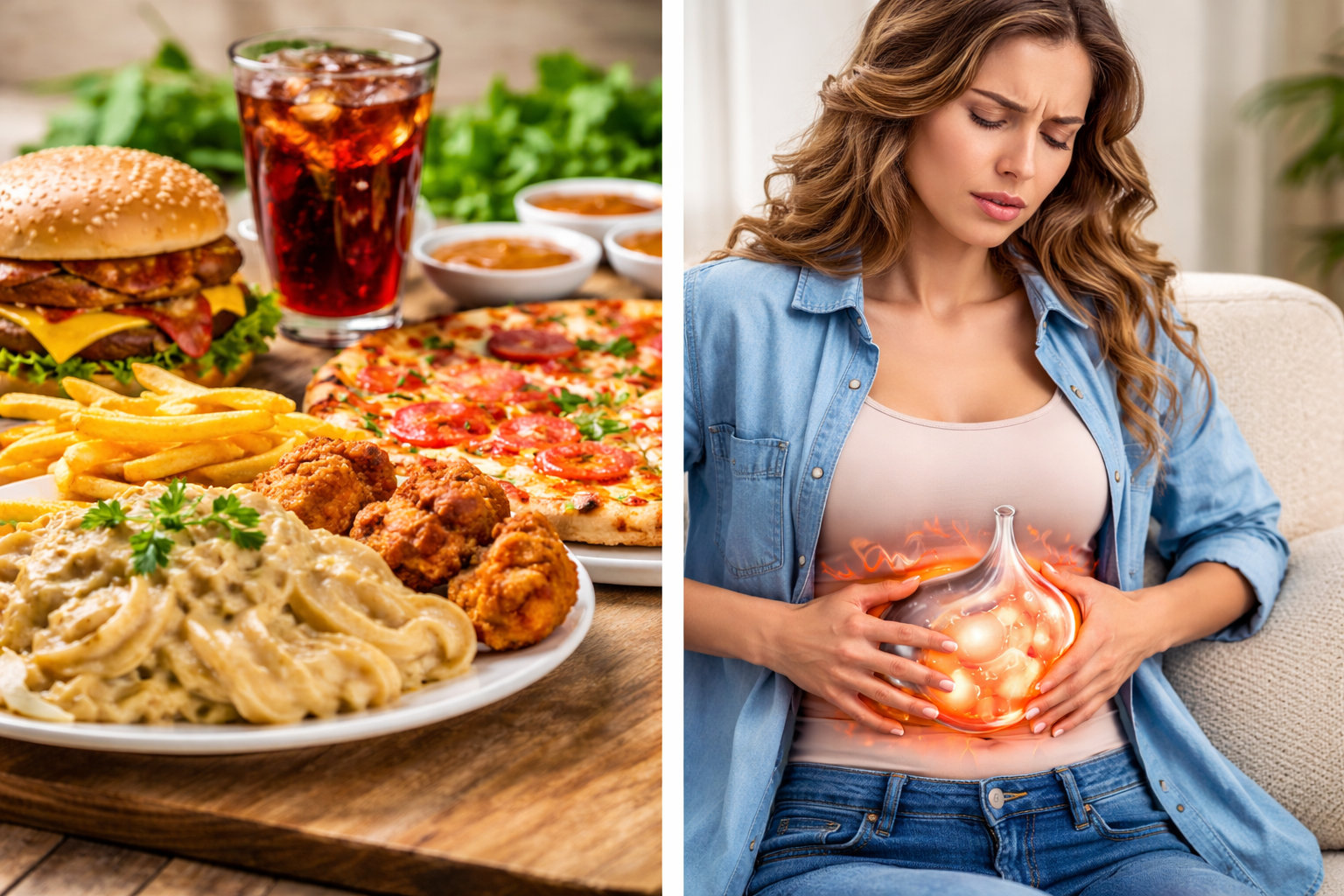
Why digestion breaks down in the first place
The digestive process depends on a precise sequence of events, each one setting the next in motion.
It starts in the stomach, where stomach acid and enzymes begin breaking down protein. Food then moves into the small intestine, where a cascade of digestive enzymes — proteases for protein, lipases for fat, amylases for carbohydrates, lactase for dairy — continue the process in stages.
If any step is incomplete, everything downstream is affected.
Several things commonly interrupt this chain:
Eating too quickly. Digestion begins in the mouth. Chewing triggers saliva production and signals the stomach to prepare. When you eat fast, you skip these early stages — and your digestive system spends the rest of the meal trying to compensate.
Low stomach acid. Many people assume bloating and reflux are caused by too much acid. In reality, the opposite is often true. Insufficient stomach acid means food isn’t properly broken down at the first stage, and partially digested material moves into the intestines before it’s ready.
Insufficient digestive enzymes. The pancreas and small intestine produce a range of enzymes to break down different food components. If production is reduced — due to age, chronic stress, or prolonged digestive strain — food will pass through incompletely processed.
Complex and fibrous foods. Beans, cruciferous vegetables, and wholegrains contain carbohydrates and fibres that are inherently difficult to digest. Without sufficient enzyme activity, these become rapid fuel for colonic bacteria — and gas is the result.
Summary: Bloating after meals typically traces back to a breakdown somewhere in the digestive sequence — eating pace, low stomach acid, reduced enzyme production, or complex foods the gut can’t fully process.
The foods most likely to cause problems
Some foods are more likely to trigger bloating than others — not because they’re unhealthy, but because they demand more from the digestive system.
Dairy. Lactose — the sugar found in milk and most dairy products — requires an enzyme called lactase to be digested. Lactase production declines naturally with age in a significant proportion of adults. If dairy causes more discomfort than it used to, this is frequently why.
Beans and legumes. These contain oligosaccharides — complex carbohydrates that human digestive enzymes cannot fully break down. Gut bacteria handle them instead, producing notable gas in the process. This is why even healthy, plant-rich diets can cause significant bloating.
Cruciferous vegetables. Broccoli, cauliflower, cabbage, and Brussels sprouts contain raffinose, another fermentable carbohydrate. Nutritious — but genuinely hard work for a digestive system that isn’t functioning optimally.
Large protein-rich meals. Protein requires significant enzymatic activity to break down completely. Heavy protein meals — particularly when combined with other complex foods — can exceed the digestive system’s capacity if enzyme levels are limited.
Carbonated drinks. These introduce gas directly into the digestive tract, compounding whatever is already being produced internally.
Summary: Dairy, legumes, cruciferous vegetables, and high-protein meals are the most common dietary drivers of post-meal bloating — particularly when the digestive system is already under strain.
Is post-meal bloating ever a sign of something more serious?
Occasional bloating after a large or rich meal is normal and not a cause for concern.
However, if bloating is happening consistently after most meals — regardless of what you eat — it’s worth paying attention to. Persistent bloating can indicate that the digestive system needs more support.
In some cases it may warrant a conversation with your GP to rule out underlying conditions such as irritable bowel syndrome (IBS), coeliac disease, or small intestinal bacterial overgrowth (SIBO).
If bloating is accompanied by unexplained weight loss, blood in the stool, persistent abdominal pain, or a significant change in bowel habits, always speak to your doctor promptly.
Summary: Occasional post-meal bloating is normal. Frequent or severe bloating — especially when accompanied by other symptoms — should be discussed with a qualified healthcare professional.
What can you do about it?
For most people, post-meal bloating responds well to a small number of targeted changes.
Slow down at mealtimes. Chewing thoroughly and eating more slowly is one of the most underrated digestive interventions available. It sounds obvious — but it meaningfully reduces the burden on the lower digestive tract by improving early-stage breakdown.
Identify your personal triggers. Keep a brief food diary for one or two weeks. You may find that bloating consistently follows dairy, pulses, or large evening meals. That pattern gives you something specific to work with.
Support your digestive enzyme capacity. If bloating occurs regularly and across a wide range of foods, the issue may lie in enzyme insufficiency rather than any specific food group. A broad-spectrum digestive enzyme supplement — one that covers proteins, fats, carbohydrates, plant fibre, and dairy — can help support the more complete breakdown of food before undigested material reaches the colon.
Digestive Aid from Care & Cure Nutraceuticals contains a 12-strain enzyme blend alongside Betaine HCl to support healthy stomach acid levels, and Pepsin for stomach-level protein digestion. Taken at the start of a meal, it works alongside the body’s own digestive processes to help break down the foods that most commonly cause post-meal discomfort.
Consider your eating environment. Stress has a measurable impact on digestive function. Eating at a desk, on the go, or while distracted can reduce the effectiveness of digestion from the very first stage. Calmer mealtimes make a real physiological difference.
Reduce carbonated drinks with meals. Swapping fizzy drinks for water or herbal tea at mealtimes removes one straightforward and immediate source of intestinal gas.
Summary: Slowing down at mealtimes, identifying personal food triggers, and supporting digestive enzyme capacity are the most practical starting points for reducing post-meal bloating.
Why digestive capacity changes as you get older
It’s worth understanding that digestive enzyme production is not fixed throughout life.
Research suggests that enzyme activity tends to decline gradually with age — which is part of why foods that caused no problems at 25 can begin causing consistent discomfort by the mid-40s. This isn’t a disease. It’s a physiological shift that affects a significant proportion of adults, and it’s frequently underappreciated as a cause of digestive symptoms.
For those experiencing bloating across multiple food types — dairy, pulses, high-protein meals, and fibrous vegetables — this broader pattern often points to reduced overall enzyme capacity rather than sensitivity to any specific food.
Digestive Aid is formulated to address exactly this situation. With dedicated enzyme activity targeting dairy (900 ALU of fungal Lactase), plant fibre (Cellulase), hard-to-digest legume carbohydrates (alpha-galactosidase), and multiple Protease strains for protein, it covers the digestive stages where most adults experience the greatest difficulty. It also includes Betaine HCl, which supports healthy stomach acid levels — a factor that is often overlooked but plays a central role in triggering the entire digestive cascade.
If you’re considering a digestive enzyme supplement, it’s worth speaking with a healthcare professional to confirm it’s appropriate for your individual circumstances.
The bottom line
Post-meal bloating is extremely common — but it isn’t something you simply have to accept.
In most cases, it traces back to incomplete digestion in the stomach or small intestine. Food arrives in the large intestine before it’s been fully processed, bacteria ferment it, and gas is the result. Understanding that process makes the solution clearer: support digestion earlier in the chain, before the problem begins.
Eating habits, mealtime pace, and digestive enzyme capacity all contribute. Addressing even one of these factors thoughtfully can make a noticeable difference. Addressing all three usually makes a significant one.
This article is for informational purposes only and does not constitute medical advice. Always consult a qualified healthcare professional before starting any new supplement, particularly if you are pregnant, breastfeeding, taking medication, or have a diagnosed digestive condition.