
7 Warning Signs Your Digestion Needs Enzyme Support
 By Dr. Wali
Your digestive system does a remarkable amount of work every single day. From the moment you eat, a complex sequence of enzymes, acids, and biological processes gets to work breaking your food down into the nutrients your body can actually absorb and use. When that system works well, you barely notice it. When it doesn’t, the signs are hard to ignore.
Digestive enzyme deficiency is more common than most people realise. Natural enzyme production declines with age, responds to stress, and can be disrupted by a range of health and dietary factors. The result is a cluster of symptoms that are often written off as normal or mistaken for other conditions entirely.
Here are seven warning signs that your digestion may need enzyme support, and what you can do about it.
What Are Digestive Enzymes and Why Do They Matter?
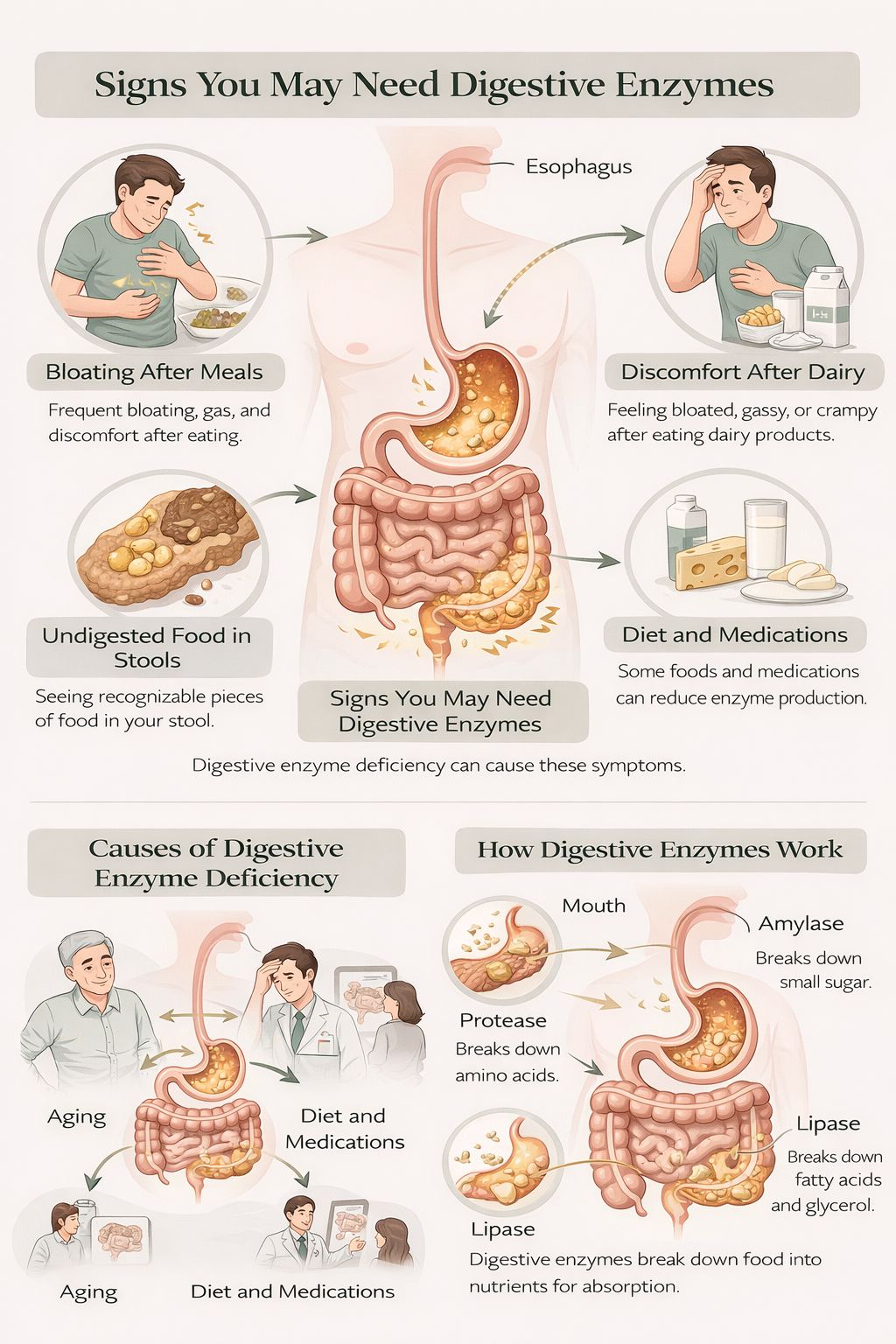
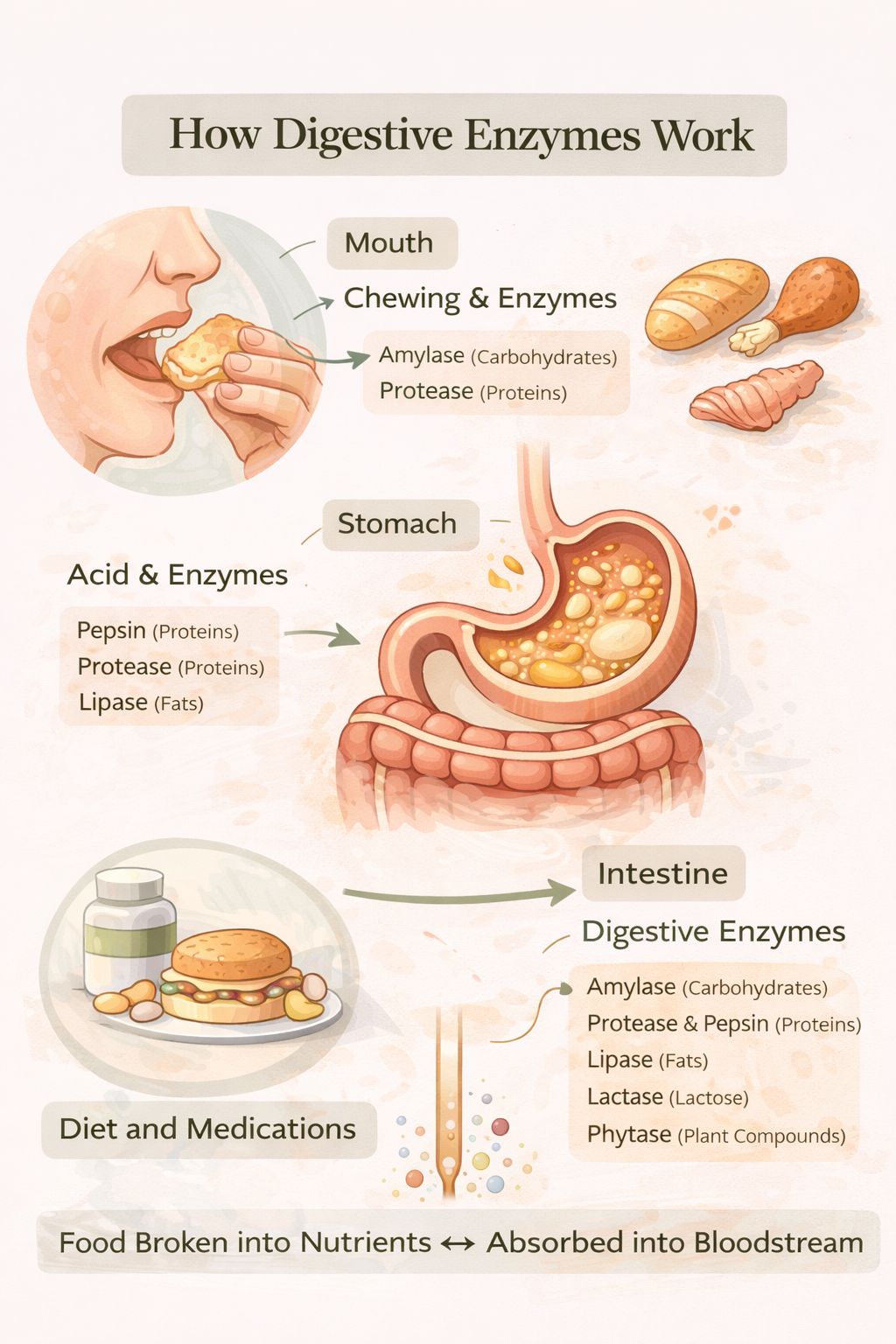
Digestive enzymes are proteins produced naturally by the body to break food down into its component parts. Amylases break down carbohydrates and starches. Proteases and Pepsin handle dietary protein. Lipase targets fats. Lactase breaks down the milk sugar lactose.
Each enzyme targets a specific type of food molecule. Together, they carry out the entire process of digestion from your mouth to your small intestine, converting food into nutrients that can pass through the gut wall and into your bloodstream.
The problem is that enzyme production is not constant. It declines with age, is reduced under stress, and can be affected by diet, medications, and overall digestive health. When enzymes are in short supply, food is not fully broken down. And what isn’t broken down properly in the small intestine becomes a problem in the large intestine.
Undigested food reaching the colon is fermented by gut bacteria. That fermentation produces gas. And gas is the primary cause of bloating, cramping, and discomfort after meals.
Sign 1 — Bloating After Every Meal
Occasional bloating is normal. Bloating after every meal is not.
If you consistently feel swollen, gassy, or uncomfortably full within an hour of eating, the cause may not be what you are eating but how well you are digesting it. When carbohydrates, fibres, and proteins reach the large intestine partially undigested, gut bacteria ferment them. That fermentation produces gas. The gas has nowhere to go quickly, and the result is the familiar pressure and distension of post-meal bloating.
Broad spectrum digestive enzyme support, particularly enzymes that target carbohydrates like Amylase, Glucoamylase, and alpha-galactosidase, helps ensure food is broken down thoroughly in the small intestine before it reaches the colon. Less undigested material means less fermentation. Less fermentation means less gas.
If bloating after meals is a regular occurrence for you, it is one of the clearest signs that your digestive enzyme activity may need support.
Sign 2 — Undigested Food in Your Stools
This one is easy to overlook, but it is a direct and reliable signal.
If you regularly notice recognisable pieces of food in your stools, particularly fibrous vegetables, seeds, or grains, it suggests that food is passing through your digestive system without being fully broken down. Some amount of visible plant material is entirely normal. But consistently seeing undigested food indicates that your enzyme activity may not be keeping up with what you are eating.
The enzymes most relevant here are Cellulase, which breaks down plant cell walls, Phytase, which targets phytic acid in grains and seeds, and Pectinase, which handles the pectin found in fruits and vegetables. A broad spectrum digestive enzyme supplement that covers these alongside the more familiar Amylase and Protease strains gives your digestive system the complete toolkit it needs.
Sign 3 — Discomfort After Dairy
Do you regularly feel bloated, gassy, or uncomfortable after eating dairy products? You are not necessarily lactose intolerant in the clinical sense. You may simply be low in Lactase.
Lactase is the enzyme responsible for breaking down lactose, the natural sugar found in milk, cheese, yogurt, and most dairy products. Lactase production declines with age in many adults. When there is not enough Lactase to digest the lactose you eat, that lactose passes undigested into the large intestine, where bacteria ferment it. The result is gas, bloating, and digestive discomfort that is easy to misattribute to dairy sensitivity.
Supplementing with a digestive enzyme formula that includes Lactase support can make a significant difference. Digestive Aid™ from Care & Cure includes Lactase within its Proprietary Enzyme Blend and provides an additional 900 ALU of fungal Lactase Units per serving, making it a particularly effective choice for those who struggle with dairy.
Sign 4 — A Heavy, Full Feeling That Won’t Shift
Most of us know the feeling. You finish a meal and instead of feeling satisfied, you feel uncomfortably heavy. The food seems to sit in your stomach for hours. You feel sluggish, slow, and reluctant to move.
This sensation is often a sign of slow gastric emptying, and one of the most common contributors is low stomach acid. Stomach acid is not just for sterilising food. It activates Pepsin, the primary protein-digesting enzyme in the stomach, and signals the digestive system to move food forward into the small intestine. When stomach acid is insufficient, that signalling slows. Food sits longer. Digestion stalls.
Betaine HCl directly supports healthy stomach acid levels. When taken alongside a broad spectrum enzyme formula, it helps create the correct stomach environment for thorough, efficient digestion. If that post-meal heaviness is a familiar feeling, Betaine HCl may be a key part of what your digestion is missing.
Sign 5 — Persistent Tiredness After Eating
Feeling pleasantly full and relaxed after a meal is normal. Feeling genuinely tired, foggy, or drained after eating is not.
Post-meal fatigue can have several causes, but one that is frequently overlooked is the energy cost of poor digestion. When your body does not have sufficient digestive enzymes to process food efficiently, digestion becomes a significantly more demanding process. Your body diverts energy to work harder at a job that should be straightforward. The result is fatigue that hits within an hour of eating.
There is also a secondary effect. Poor digestion means nutrients from food are not being fully absorbed. If your body is not extracting the carbohydrates, proteins, and fats it needs effectively, your energy levels will suffer regardless of how well you eat. Supporting enzyme activity helps improve nutrient extraction, which in turn supports more stable energy throughout the day.
Sign 6 — Irregular Bowel Habits
Digestive regularity depends on the entire digestive system working smoothly from start to finish. Enzyme activity at the early stages of digestion has a direct knock-on effect on what happens further down.
When food is incompletely digested in the stomach and small intestine, the large intestine receives a heavier load of unprocessed material. This can result in constipation, as the colon works harder to process what it receives, or in loose stools, as fermentation and irritation accelerate transit time. In some people, the two alternate.
Irregular bowel habits are one of the most common symptoms associated with digestive enzyme insufficiency, and one of the first things people report improving when they add enzyme support to their daily routine. Consistent, thorough digestion from the first stage of eating creates the conditions for consistent, regular output.
Sign 7 — Nutritional Deficiencies Despite Eating Well
This is perhaps the most overlooked sign of all. You eat a balanced, nutritious diet. You take care over your food choices. And yet blood tests or symptoms suggest you are deficient in key vitamins or minerals.
The reason may not be what you are eating. It may be how well you are absorbing what you eat.
Nutrient absorption happens in the small intestine. But nutrients can only be absorbed once food has been broken down into small enough molecules to cross the gut wall. If enzyme activity is insufficient and food is not being fully digested, nutrients remain bound inside food molecules that the gut cannot absorb. They pass through and are lost.
This is particularly relevant for protein-derived amino acids, fat-soluble nutrients, and minerals like calcium, zinc, and iron that require thorough digestive breakdown for absorption. Phytase, an enzyme included in Digestive Aid™, specifically helps release minerals from the phytic acid found in wholegrains and legumes, improving their bioavailability significantly.
You are not just what you eat. You are what you digest and absorb.
What Can You Do About It?
If you recognise several of these signs, the first step is to consider whether your digestive enzyme activity needs support. There are practical steps you can take straight away.
1. Eat Mindfully and Chew Thoroughly
Digestion begins in the mouth. Chewing thoroughly activates salivary amylase, the first digestive enzyme your food encounters. Taking time over meals, eating without distraction, and chewing properly reduces the workload on everything that follows.
2. Avoid Eating Under Stress
The body’s stress response actively suppresses digestive function. Eating when you are rushed, anxious, or distracted reduces stomach acid production and enzyme output. Even a few slow breaths before eating can make a meaningful difference to the quality of your digestion.
3. Consider Your Stomach Acid
Low stomach acid is a frequently underappreciated contributor to poor digestion. If you experience the heavy, full feeling described in Sign 4, or if you are over 40 and notice your digestion has changed, speak with your GP about stomach acid testing.
4. Support Your Digestive Enzymes Daily
A broad spectrum digestive enzyme supplement taken consistently with meals provides your digestive system with the tools it may be missing. Look for a formula that covers proteins, fats, carbohydrates, fibre, and dairy, and includes Betaine HCl for stomach-level support.
Digestive Aid™ from Care & Cure provides 12 enzyme strains in a 700 mg Proprietary Enzyme Blend, alongside 470 mg of Betaine HCl, Pepsin, Bromelain, and 900 ALU of fungal Lactase Units. GMP-certified and manufactured in an FDA-registered facility in the USA.
Ready to Support Your Digestion?
If you recognise three or more of the signs above, your digestion may be telling you something worth listening to. Supporting your digestive enzyme activity is one of the most practical steps you can take for your everyday gut health, energy, and nutrient absorption.
Digestive Aid™ is available directly from Care & Cure Nutraceuticals at www.careandcure.co.uk. Each bottle provides 60 servings, a full two-month supply, with 120 capsules at two capsules per meal.
Prefer a once-daily vegetarian capsule? Enzaid™ offers digestive enzyme support in a single Vegetable Cellulose capsule, suitable for vegetarians and ideal for everyday digestive maintenance.
Frequently Asked Questions
What are the signs you need digestive enzymes?
Common signs include bloating after meals, a heavy feeling after eating, discomfort after dairy, undigested food in stools, tiredness after eating, irregular bowel habits, and nutritional deficiencies despite a good diet. If you experience several of these regularly, your digestive enzyme activity may benefit from support.
Can digestive enzymes help with bloating?
Yes. Digestive enzymes support the complete breakdown of food before it reaches the large intestine. When food is fully digested, there is less undigested material for gut bacteria to ferment. Less fermentation means less gas and less bloating. A broad spectrum enzyme formula that covers carbohydrates, proteins, fats, and fibre provides the most comprehensive bloating support.
Does Betaine HCl help digestion?
Yes. Betaine HCl supports healthy stomach acid levels. Adequate stomach acid is needed to activate Pepsin, begin protein breakdown, and signal the digestive system to move food forward efficiently. Many adults, particularly those over 40, produce less stomach acid than they need. Betaine HCl directly supports this.
At what age does enzyme production decline?
Digestive enzyme production can begin to decline from around the age of 30, with more noticeable changes often occurring after 40. This is one reason why digestive symptoms that were not present in younger years can become more frequent as we age. It is also one of the reasons digestive enzyme supplementation is particularly relevant for adults over 40.
What is the best digestive enzyme supplement in the UK?
Look for a broad spectrum formula that covers all major food groups: proteins, fats, carbohydrates, fibre, and dairy. Digestive Aid™ from Care & Cure provides 12 enzyme strains in a 700 mg proprietary blend alongside Betaine HCl, Pepsin, Bromelain, and fungal Lactase Units. It is GMP-certified and manufactured in an FDA-registered facility in the USA.
Are digestive enzyme supplements safe for daily use?
For most healthy adults, digestive enzyme supplements are safe for daily use when taken as directed. If you are pregnant, breastfeeding, taking prescription medications, or have a history of gastric or duodenal ulcers, consult your GP before starting supplementation. Always read the label and do not exceed the recommended dose.